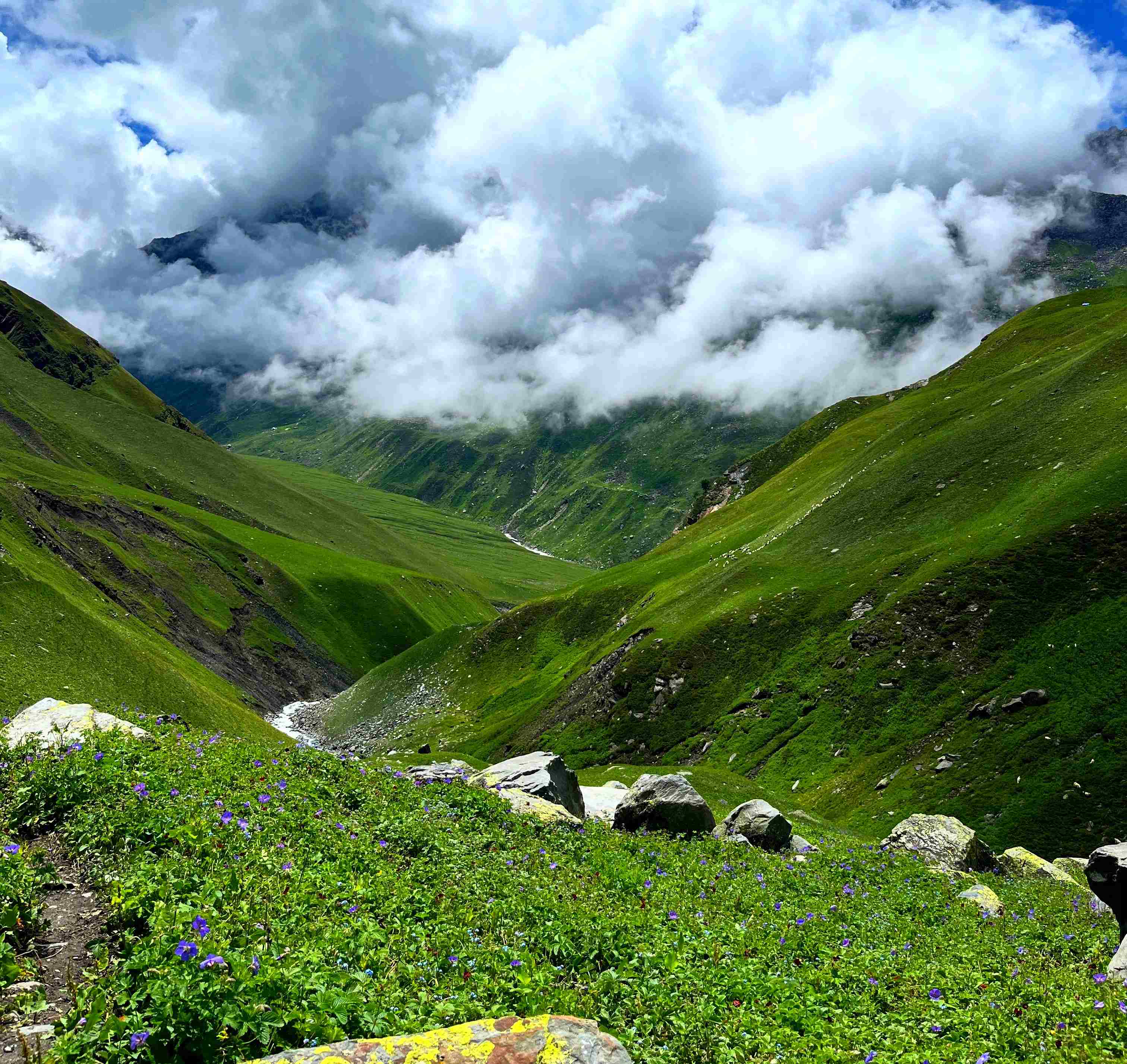
Hampta Pass Trek Overview
Imagine starting a trek in a valley filled with pine forests, wildflowers, waterfalls, and grazing horses, only to find yourself a few days later standing among barren mountains that look more like Ladakh than Himachal Pradesh. That dramatic transformation is what makes the Hampta Pass Trek one of the most fascinating Himalayan adventures in India.
Located in Himachal Pradesh, Hampta Pass connects the lush green Kullu Valley with the stark and rugged landscapes of Lahaul. The trek begins near Manali and crosses a high mountain pass at an altitude of approximately 4,290 meters (14,100 feet) before descending into an entirely different geographical world.
Many Himalayan treks are famous for a particular mountain, lake, or viewpoint. Hampta Pass is different. Its greatest attraction is the journey itself. Every day introduces a new landscape. Dense forests gradually give way to rolling meadows, glacial valleys, rocky mountain terrain, snow patches, and finally the cold desert scenery of Lahaul.
What makes the trek particularly appealing is its accessibility. Unlike longer Himalayan expeditions that require weeks of planning and extensive trekking experience, Hampta Pass can be completed within four to five days while still offering the feeling of a genuine mountain expedition.
The trek attracts a wide range of travelers. Beginners are drawn by its manageable difficulty level, while experienced trekkers appreciate the variety of scenery packed into a relatively short route. Photographers love the dramatic contrasts, and nature enthusiasts find themselves constantly surrounded by changing landscapes.
One of the reasons Hampta Pass has become so popular over the years is that it never feels repetitive. Some treks offer stunning scenery but remain visually similar from start to finish. Here, every campsite feels unique, every valley has its own character, and every day reveals something unexpected.
The crossing of Hampta Pass itself is often the moment people remember most. Standing on the pass and looking back toward the green valleys of Kullu while seeing the barren mountains of Lahaul stretching ahead creates a sense of transition that few Himalayan treks can match.
Adding even more appeal is the opportunity to visit Chandratal Lake at the end of the trek. With its turquoise waters and dramatic mountain backdrop, the lake provides a spectacular finale to an already unforgettable journey.
For trekkers searching for a route that combines adventure, scenery, accessibility, and diversity, Hampta Pass remains one of the strongest contenders anywhere in the Indian Himalayas.
While the wildflower meadows on the Hampta trail are magical, the Valley of Flowers Trek is on a league of its own. Imagine walking through an entire valley where millions of blossoms blanket the earth in vibrant colors—it is nature’s own canvas. It is the ultimate destination for those who are captivated by the blooming landscapes of the Himalayas.
Why Hampta Pass Trek Is Worth It
The Himalayas are filled with incredible trekking routes, each offering its own unique rewards. Some are famous for their cultural experiences, others for their towering peaks or remote wilderness. Hampta Pass stands out because it delivers an astonishing variety of landscapes within a surprisingly short period of time.
The journey begins in the green heart of the Kullu Valley. The trail winds through forests where sunlight filters through tall pine trees and streams rush down from the mountains. During the summer season, the surrounding slopes are covered in fresh vegetation, creating scenes that feel almost untouched by modern life.
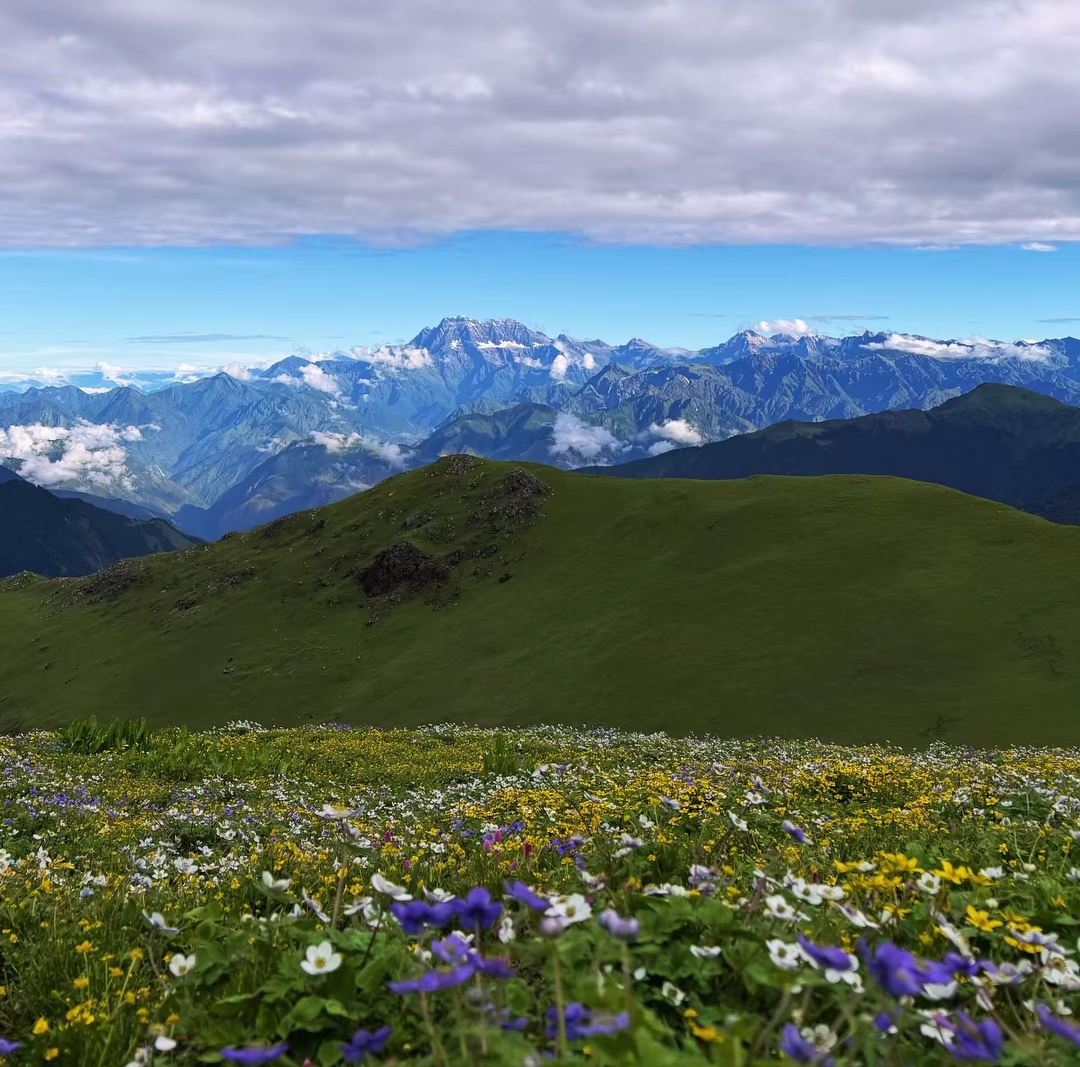
As the trek progresses, the valley gradually opens. Forests become less dense and vast alpine meadows begin to dominate the landscape. During July and August, these meadows are often covered with colorful wildflowers. The combination of green grasslands, snow-covered peaks, and flowing streams creates some of the most beautiful scenery found on any Himalayan trek.
Further ahead, the terrain becomes increasingly dramatic. The mountains rise higher, glaciers appear on distant slopes, and the valley begins to feel wilder and more remote. Campsites become smaller islands of civilization surrounded by vast mountain landscapes.
The day of the pass crossing transforms the entire experience.
After hours of climbing through rocky terrain and snow patches, trekkers eventually reach Hampta Pass. At that moment, the geography changes almost instantly. The fertile valleys of Kullu disappear behind you, replaced by the dry, rugged, high-altitude environment of Lahaul.
This sudden transition is difficult to fully appreciate until you witness it in person. Within a single day, the scenery shifts from green Himalayan valley to cold mountain desert. The contrast is so dramatic that many trekkers describe it as feeling like two completely different treks combined into one.
The route also provides an excellent balance between challenge and reward. It demands effort but remains accessible to most reasonably fit individuals. There are no technical climbing sections, yet the journey still feels adventurous and remote enough to satisfy experienced trekkers.
Another reason Hampta Pass remains so highly regarded is its changing personality throughout the season. Early summer often brings snow-covered trails and icy landscapes. Mid-season introduces vibrant greenery and blooming flowers. September offers clear skies and spectacular mountain views. Each period presents a different version of the same trek.
The combination of accessibility, diversity, and natural beauty explains why Hampta Pass continues to be recommended as one of the finest short Himalayan treks in India.
Hampta Pass Trek Quick Facts
| Details | Information |
|---|---|
| Trek Name | Hampta Pass Trek |
| Location | Himachal Pradesh, India |
| Region | Kullu Valley to Lahaul Valley |
| Maximum Altitude | 4,290 m (14,100 ft) |
| Trek Distance | 26–30 km (Approx.) |
| Trek Duration | 4–5 Days |
| Difficulty Level | Easy to Moderate |
| Starting Point | Jobra |
| Ending Point | Chatru |
| Best Time to Visit | June to September |
| Accommodation | Camping |
| Nearest Airport | Bhuntar Airport (Kullu) |
| Nearest Railway Station | Chandigarh Railway Station |
| Chandratal Lake Visit | Usually included after the trek (weather permitting) |
| Permit Required | No special trekking permit required |
| Mobile Network | Available till Manali; limited on the trek route |
| Famous For | Dramatic Pass Crossing, Green Valleys, Lahaul Desert Landscapes, Chandratal Lake |
Best Time to Visit Hampta Pass Trek
Choosing the right season can significantly influence your trekking experience. Fortunately, Hampta Pass remains attractive throughout most of its trekking window, with each month offering something different.
Unlike many Himalayan treks that are avoided during the monsoon season, Hampta Pass actually reaches peak popularity during this period. The reason lies in its unique geography. While the Kullu side receives enough rainfall to create lush green landscapes, the Lahaul side remains relatively dry because it lies within the rain shadow region of the Pir Panjal Range.
This combination creates some of the most beautiful trekking conditions found anywhere in the Himalayas.
Hampta Pass Trek in June
June marks the beginning of the trekking season. Snow from the previous winter still covers sections near the pass, and trekkers often encounter substantial snowfields at higher elevations.
The valleys are fresh and vibrant after months of winter. Streams flow strongly from melting snow, and mountain slopes begin turning green as temperatures rise.
For trekkers hoping to experience snow without undertaking a full winter expedition, June is often considered one of the best months to visit.
Hampta Pass Trek in July
July transforms the landscape dramatically. Meadows become greener, flowers begin blooming, and waterfalls appear throughout the valley.
The trail feels alive during this period. Fresh vegetation covers the slopes, and the contrast between green valleys and snow-covered peaks reaches its peak.
Although occasional rain showers are common, they contribute significantly to the beauty of the landscape.
Hampta Pass Trek in August
August continues the spectacular conditions of July. Wildflowers remain abundant, rivers flow strongly, and the surrounding scenery looks exceptionally vibrant.
Cloud formations often add drama to the landscape, creating constantly changing views throughout the day. Photographers frequently consider August one of the most rewarding months for capturing the character of Hampta Pass.
Hampta Pass Trek in September
September offers a different kind of beauty. As the monsoon gradually retreats, skies become clearer and visibility improves significantly.
Distant peaks that may remain hidden behind clouds during earlier months become easier to photograph. The weather also tends to be more stable, making September particularly attractive for trekkers seeking reliable mountain views.
Hampta Pass Trek in October
The trekking season generally concludes during early October. Temperatures begin dropping rapidly, nights become colder, and fresh snowfall becomes increasingly likely near the pass.
While the landscapes remain beautiful, weather conditions can become unpredictable. Most organized trekking operators finish their Hampta Pass departures by this period.
Hampta Pass is often called the most beautiful short trek, but if you want to explore the ‘heaven on earth,’ look no further than the Kashmir Great Lakes Trek. With its pristine alpine lakes and untouched meadows that change hues with the passing sun, this trek offers a visual treat that rivals even the most iconic trails in the world. It is the perfect follow-up for those who fell in love with the meadows of Hampta.
Hampta Pass Trek Month-by-Month Weather Guide
| Month | Day Temp | Night Temp | Trail Conditions |
|---|---|---|---|
| June | 12°C–18°C | -2°C–5°C | Snow near pass |
| July | 10°C–17°C | 2°C–7°C | Green valleys & flowers |
| August | 10°C–16°C | 2°C–6°C | Monsoon scenery |
| September | 8°C–15°C | -1°C–5°C | Clear skies & views |
| October | 5°C–12°C | -5°C–2°C | Cold, possible snow |
Hampta Pass Trek Difficulty Level
One of the most common questions prospective trekkers ask is whether Hampta Pass is suitable for beginners.
The answer is yes—but with realistic expectations.
Hampta Pass is generally classified as an easy-to-moderate trek. This rating reflects the fact that the route does not require technical climbing skills, ropes, or mountaineering experience. However, it remains a genuine Himalayan trek that reaches over 4,000 meters in altitude.
The terrain varies considerably throughout the journey. Trekkers walk through forests, cross streams, traverse meadows, climb rocky slopes, and occasionally negotiate snow-covered sections depending on the season.
Most trekking days involve between four and seven hours of walking. While the distances are not extreme, the combination of altitude and changing terrain adds a level of challenge that should not be underestimated.
The most demanding day is typically the crossing of Hampta Pass itself. This section involves a steady ascent to the pass followed by a long descent toward Shea Goru. The climb is physically demanding but manageable for individuals with reasonable fitness.
Altitude presents a greater challenge than many first-time trekkers expect. As elevation increases, oxygen levels decrease, making physical activity feel more demanding than it would at lower elevations.
Preparation is therefore important. Regular walking, jogging, cycling, or stair climbing in the weeks leading up to the trek can make the experience significantly more enjoyable.
Hampta Pass is ideal for adventurous beginners, active travelers, photographers, and hikers looking to experience the Himalayas without committing to an extended expedition. Those who arrive prepared and maintain a steady pace generally find the trek both achievable and immensely rewarding.
Hampta Pass is a fantastic introduction to high-altitude trekking, but if you are looking for a winter wonderland experience, the Kedarkantha Trek is an absolute classic. Known for its accessible beauty and breathtaking 360-degree summit views, it’s a great way to test your fitness before taking on more strenuous passes in the Himalayas.
Hampta Pass Trek Highlights
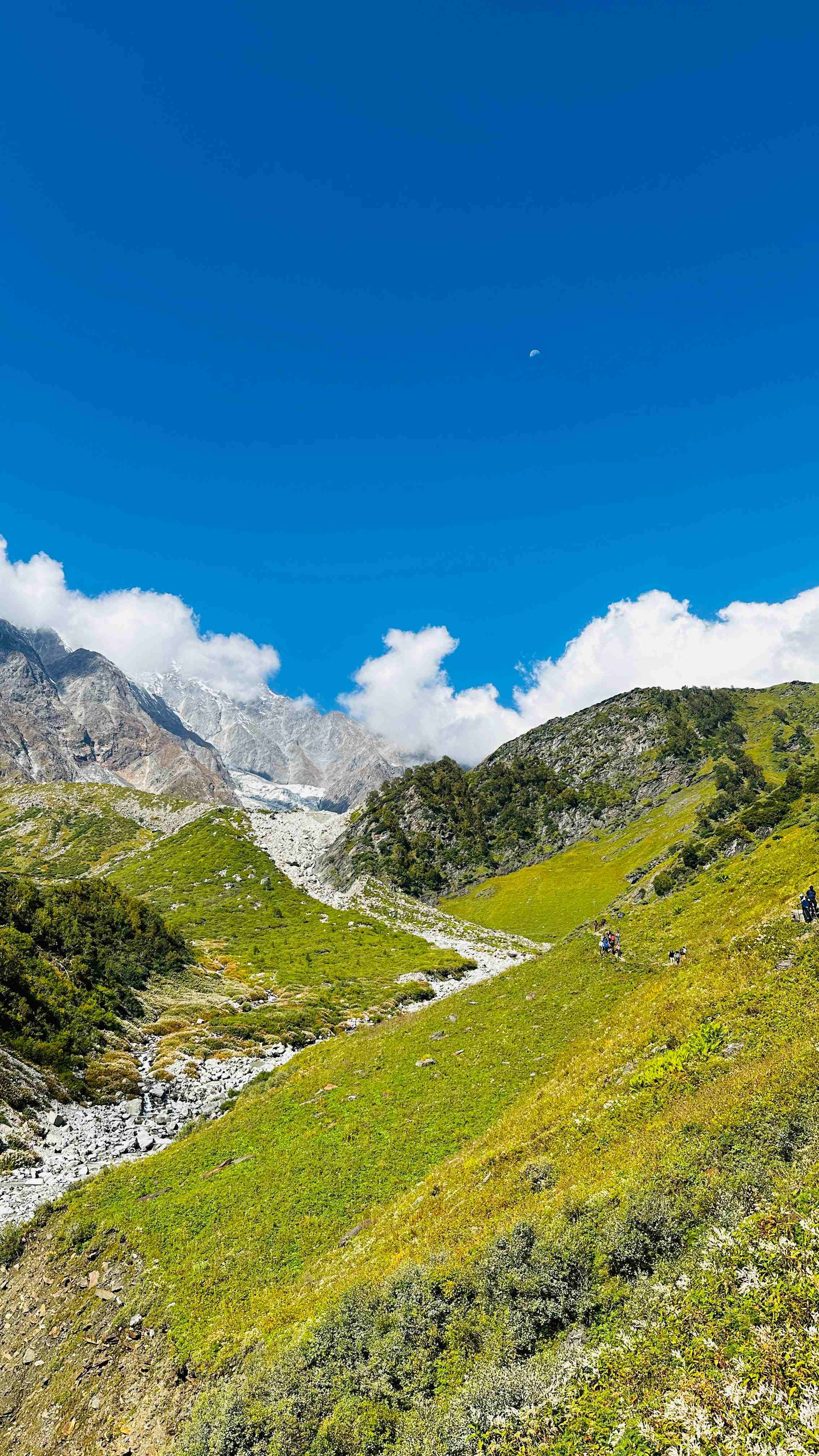
Every trek has a signature moment. On some trails, it is a summit. On others, it might be a famous lake or a panoramic viewpoint. Hampta Pass is different because the entire journey feels like a series of highlights rather than a trek leading toward a single destination.
The first surprise comes almost immediately after leaving Jobra. Dense forests surround the trail, creating an atmosphere that feels more like a woodland hike than a high-altitude Himalayan trek. Tall pine trees, moss-covered rocks, and crystal-clear streams accompany trekkers during the opening stages of the route.
As the valley widens, the scenery changes dramatically. Vast meadows appear, framed by snow-covered peaks and crossed by glacial rivers. During the peak trekking season, these grasslands become some of the most beautiful landscapes in Himachal Pradesh. The contrast between bright green slopes and distant white mountains creates scenes that seem almost unreal.
The Hampta Valley itself deserves far more attention than it usually receives. Many trekkers become so focused on reaching the pass that they overlook how spectacular the approach is. The valley grows larger and more dramatic with every hour of walking. Waterfalls tumble down cliffs, streams weave through the grasslands, and mountains seem to rise directly from the valley floor.
Balu Ka Ghera introduces a completely different mood. The campsite sits beneath massive mountain walls that dominate the horizon. The landscape here feels raw and untamed. At night, the silence becomes one of the most memorable parts of the experience.
Then comes the crossing of Hampta Pass.
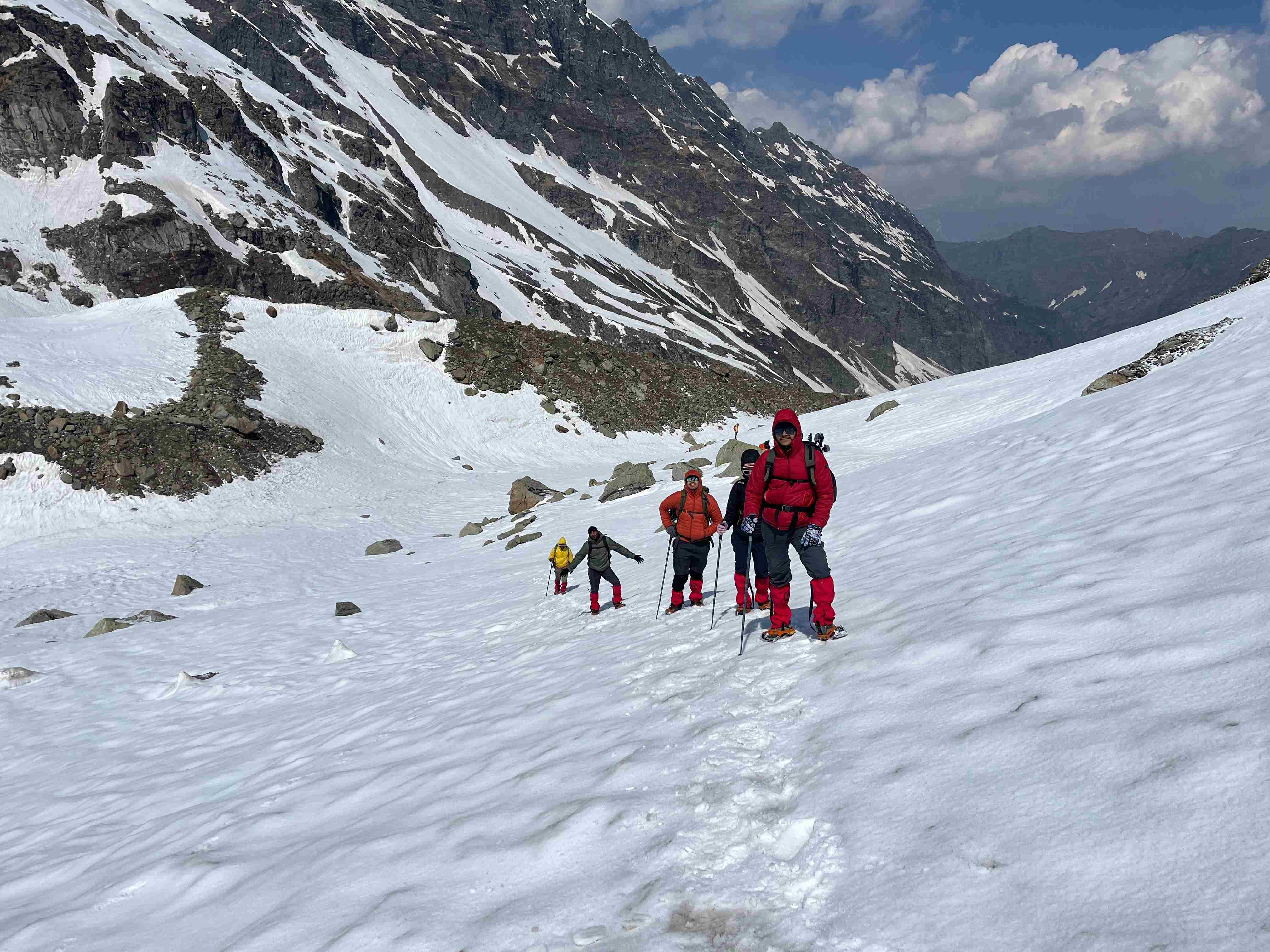
The climb to the pass is challenging enough to feel rewarding but not so difficult that it becomes overwhelming. As the trail gains altitude, the terrain becomes increasingly rugged. Depending on the season, trekkers may encounter snowfields, loose rocks, and glacial terrain.
The reward arrives at the top.
Few places in the Indian Himalayas demonstrate such an abrupt geographical transition. Behind lies the green world of Kullu. Ahead stretches the rugged terrain of Lahaul. The change is immediate and dramatic.
The descent toward Shea Goru reveals yet another landscape. The green meadows disappear, replaced by rocky slopes and barren mountains. The environment feels harsher, drier, and more remote.
Finally, the journey often concludes with a visit to Chandratal Lake. Situated at high altitude and surrounded by rugged peaks, the lake is famous for its turquoise waters and changing reflections. It provides a fitting finale to a trek defined by constantly evolving scenery.
Hampta Pass Trek Itinerary: Day-by-Day Route Guide
Day 1: Manali to Jobra and Trek to Chika
Altitude: 3,100 m
Distance: 2–3 km
Trekking Time: 2–3 Hours
Most Hampta Pass adventures begin in Manali, where trekkers gather before driving to Jobra, the official starting point of the trail.
The drive itself offers an early glimpse into the landscapes that define the region. Roads climb through forests and mountain valleys before eventually reaching Jobra. Once backpacks are adjusted and final preparations completed, the trek begins.
The first day’s walk is intentionally short. Rather than immediately demanding long hours of hiking, the route allows trekkers to ease into the journey.
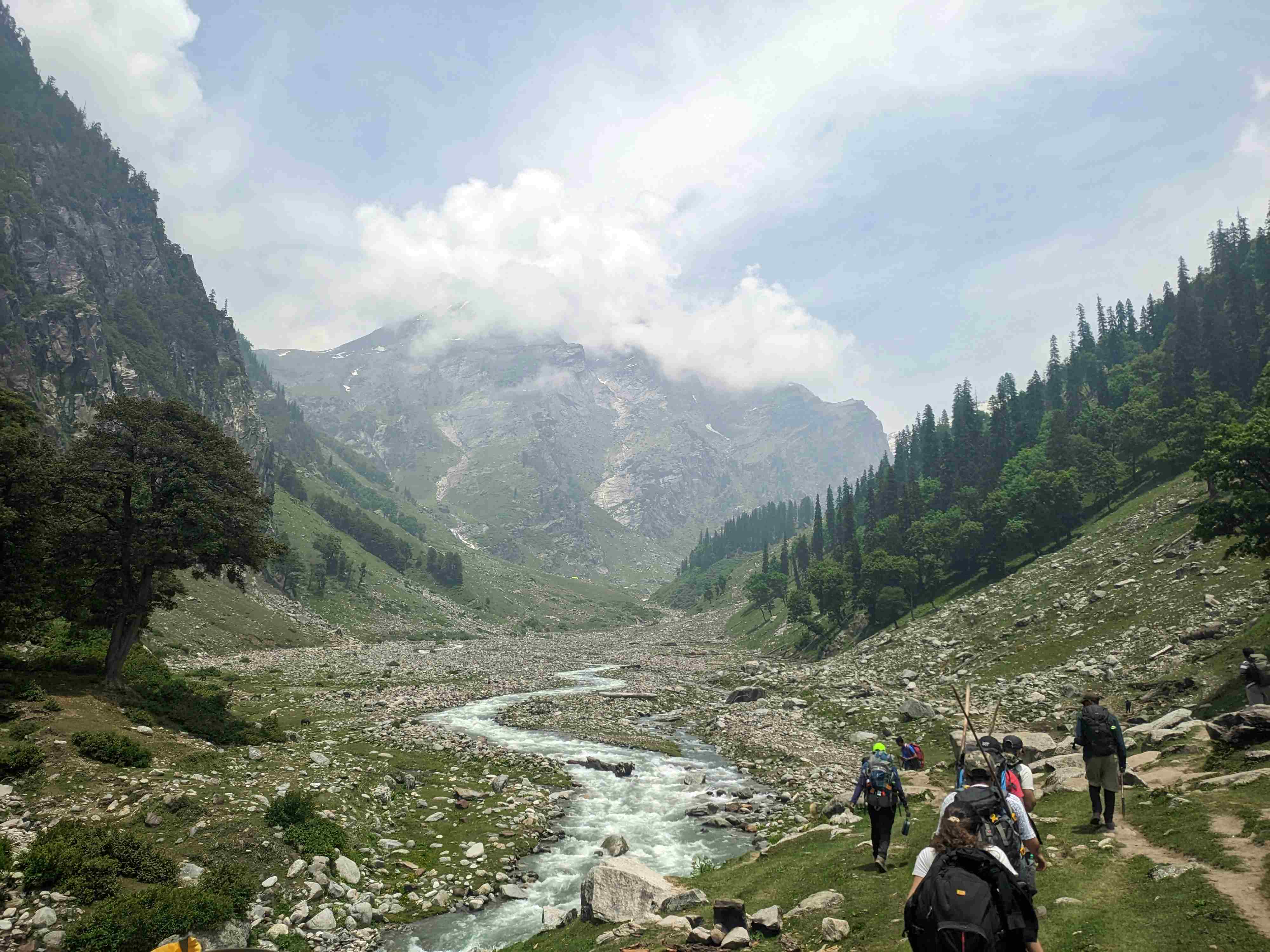
The trail follows a river through thick forests filled with pine and maple trees. Sunlight filters through the branches, creating shifting patterns on the ground. Streams cross the path at various points, while distant peaks occasionally appear between the trees.
The campsite at Chika sits in a beautiful open meadow beside a river. Surrounded by mountains and grasslands, it offers a peaceful introduction to the trek.
As evening approaches, the sound of flowing water becomes the dominant feature of the landscape. Many trekkers spend their first night simply sitting outside their tents, watching clouds drift across the surrounding mountains.
Day 2: Chika to Balu Ka Ghera
Altitude: 3,700 m
Distance: 8–9 km
Trekking Time: 5–6 Hours
The second day introduces trekkers to the true character of Hampta Valley.
The trail gradually leaves the forest behind and enters a much broader landscape. Mountains rise higher on either side, and the valley floor becomes increasingly open. During the summer months, green meadows stretch across large sections of the route.
Glacial streams frequently cross the valley. Depending on recent weather and snowmelt conditions, some crossings may require careful footing. The sound of rushing water accompanies much of the day’s walk.
As altitude increases, vegetation begins to change. Trees become rare, replaced by alpine grasslands and rocky terrain. The valley starts feeling larger and more remote.
One of the most enjoyable aspects of this section is the constant sense of progression. Every turn reveals a slightly different perspective, and the mountains seem to grow taller as the day continues.
The arrival at Balu Ka Ghera marks a noticeable shift in atmosphere. The campsite is surrounded by massive peaks and rocky slopes. Compared with Chika, it feels significantly more isolated.
As darkness falls, temperatures drop quickly. On clear nights, the sky often becomes filled with stars, creating one of the most memorable evenings of the trek.
Day 3: Balu Ka Ghera to Shea Goru via Hampta Pass
Altitude of Hampta Pass: 4,290 m
Altitude of Shea Goru: 3,900 m
Distance: 7–8 km
Trekking Time: 7–9 Hours
This is the day that defines the Hampta Pass Trek.
Most groups begin before sunrise. The early start is not only practical but also adds a sense of anticipation to the day. The pass crossing represents the highest point of the trek and the gateway between two very different mountain regions.
The ascent begins gradually before becoming steeper as altitude increases. The trail winds through rocky terrain and, depending on the season, patches of snow. Breathing becomes noticeably harder at higher elevations, encouraging a slower and more deliberate pace.
The final climb to Hampta Pass requires determination, but the reward more than justifies the effort.
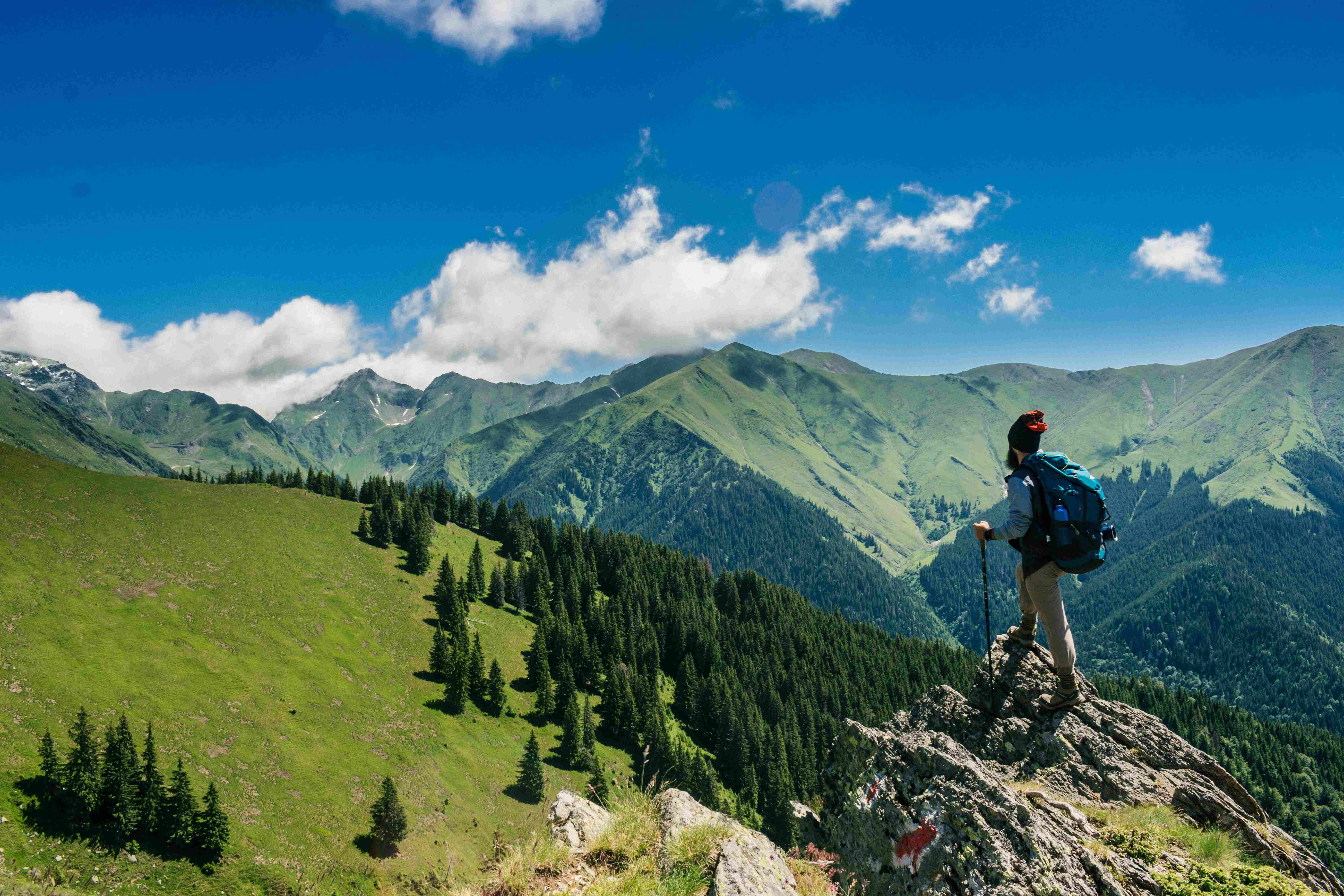
Standing on the pass feels like reaching a natural border between two worlds. Looking back reveals the green valleys of Kullu, while the opposite side opens toward the barren landscapes of Lahaul.
Most trekkers spend considerable time here, taking photographs and absorbing the views before beginning the descent.
The route down toward Shea Goru feels completely different from the climb. The landscape changes almost immediately. Green slopes disappear, replaced by rugged mountains and rocky valleys.
By the time trekkers reach Shea Goru, the transformation is complete.
The campsite is located beside a river in a dramatic valley surrounded by barren peaks. After the effort of crossing the pass, the evening often feels especially rewarding.
Day 4: Shea Goru to Chatru
Altitude: 3,300 m
Distance: 6–7 km
Trekking Time: 4–5 Hours
The final trekking day follows the river downstream through the landscapes of Lahaul.
Compared with the previous day’s pass crossing, the walking is relatively relaxed. The trail gradually descends through a wide valley where barren mountains dominate the horizon.
The scenery remains strikingly different from the forests and meadows encountered at the beginning of the trek. Dry slopes, rocky formations, and vast open spaces create an environment that feels more similar to Ladakh than Manali.
As Chatru approaches, signs of civilization slowly begin to reappear. Roads become visible, and occasional roadside shelters break the feeling of complete isolation.
Reaching Chatru marks the official conclusion of the trekking portion of the journey. For many trekkers, however, one final highlight still awaits at Chandratal Lake.
Hampta Pass Trek Altitude and Acclimatization
Although Hampta Pass is often recommended for beginners, altitude should never be taken lightly. The trek climbs from approximately 2,800 meters at Jobra to 4,290 meters at Hampta Pass.
At these elevations, oxygen levels are significantly lower than at sea level. Even physically fit individuals may notice that activities requiring little effort at home become surprisingly demanding in the mountains.
The gradual nature of the itinerary helps reduce the risk of altitude-related problems. Camps are positioned to allow trekkers time to adapt while steadily gaining elevation.
Altitude Profile
| Location | Altitude |
|---|---|
| Manali | 2,050 m |
| Jobra | 2,800 m |
| Chika | 3,100 m |
| Balu Ka Ghera | 3,700 m |
| Hampta Pass | 4,290 m |
| Shea Goru | 3,900 m |
| Chatru | 3,300 m |
Altitude sickness can affect anyone regardless of age or fitness level. Common symptoms include headaches, nausea, loss of appetite, dizziness, unusual fatigue, and difficulty sleeping.
The most effective way to reduce risk is to maintain a steady pace, drink sufficient water, eat regularly, and avoid unnecessary exertion. Trekkers should never ignore symptoms that become progressively worse.
Most visitors complete the Hampta Pass Trek without serious altitude issues, but understanding the risks remains an important part of responsible mountain travel.
By the time you descend into Chatru, you’ll not only have crossed one of the most beautiful mountain passes in Himachal Pradesh but also experienced a remarkable journey through some of the most varied landscapes in the Indian Himalayas.
Food and Accommodation on the Hampta Pass Trek
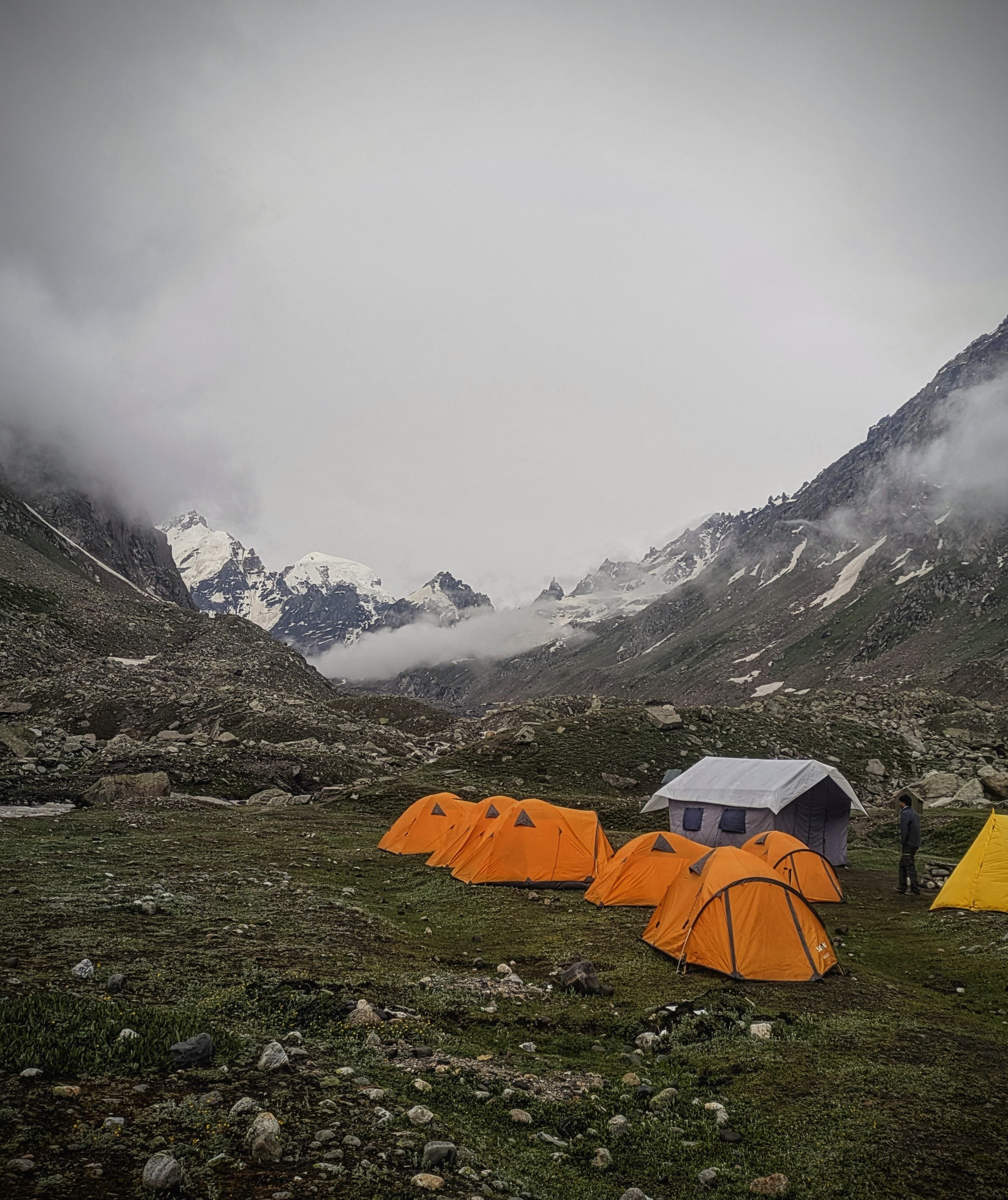
One of the reasons the Hampta Pass Trek feels like a genuine Himalayan adventure is the absence of permanent lodges and mountain villages along most of the route. Once you leave Manali and begin walking from Jobra, the comforts of civilization quickly fade into the background. For the next few days, your accommodation will be simple mountain camps surrounded by some of the most spectacular scenery in Himachal Pradesh.
The first night is usually spent at Chika, a beautiful campsite set beside a glacial stream. The sound of rushing water continues throughout the night, while snow-covered peaks rise in the distance. It is an ideal introduction to life on the trail.
The second campsite, Balu Ka Ghera, feels much more remote. The valley becomes wider, the mountains grow taller, and the landscape begins to take on a wild alpine character. As evening falls and temperatures drop, the sense of being deep in the Himalayas becomes impossible to ignore.
Beyond Hampta Pass lies Shea Goru, perhaps the most dramatic campsite of the trek. Located in the barren landscapes of Lahaul, it offers an entirely different atmosphere from the green valleys seen earlier in the journey. The contrast is remarkable and serves as a reminder of how quickly geography changes in this part of the Himalayas.
Most trekking companies provide quality tents, sleeping mats, dining tents, and basic toilet facilities. While the setup is simple, it is generally comfortable enough for the duration of the trek. In fact, many trekkers find that sleeping under a sky full of stars becomes one of their favorite memories from the journey.
Food on the trek is designed to be nourishing rather than luxurious. Breakfast usually consists of items such as porridge, eggs, toast, parathas, tea, and coffee. Lunch is often served at scenic points along the route, while dinner is typically the largest meal of the day.
Warm soup is commonly served before dinner, followed by rice, lentils, vegetables, chapatis, and occasionally pasta or noodles. After several hours of trekking in cold mountain conditions, even simple meals feel incredibly satisfying.
Drinking water is generally sourced from mountain streams and purified before consumption. Trekkers should still carry a reusable water bottle and, if trekking independently, a reliable water purification method.
One thing many first-time trekkers don’t expect is how enjoyable these simple routines become. Sharing meals inside a dining tent while listening to rain outside or watching the sunset from camp often becomes just as memorable as reaching Hampta Pass itself.
What to Pack for the Hampta Pass Trek
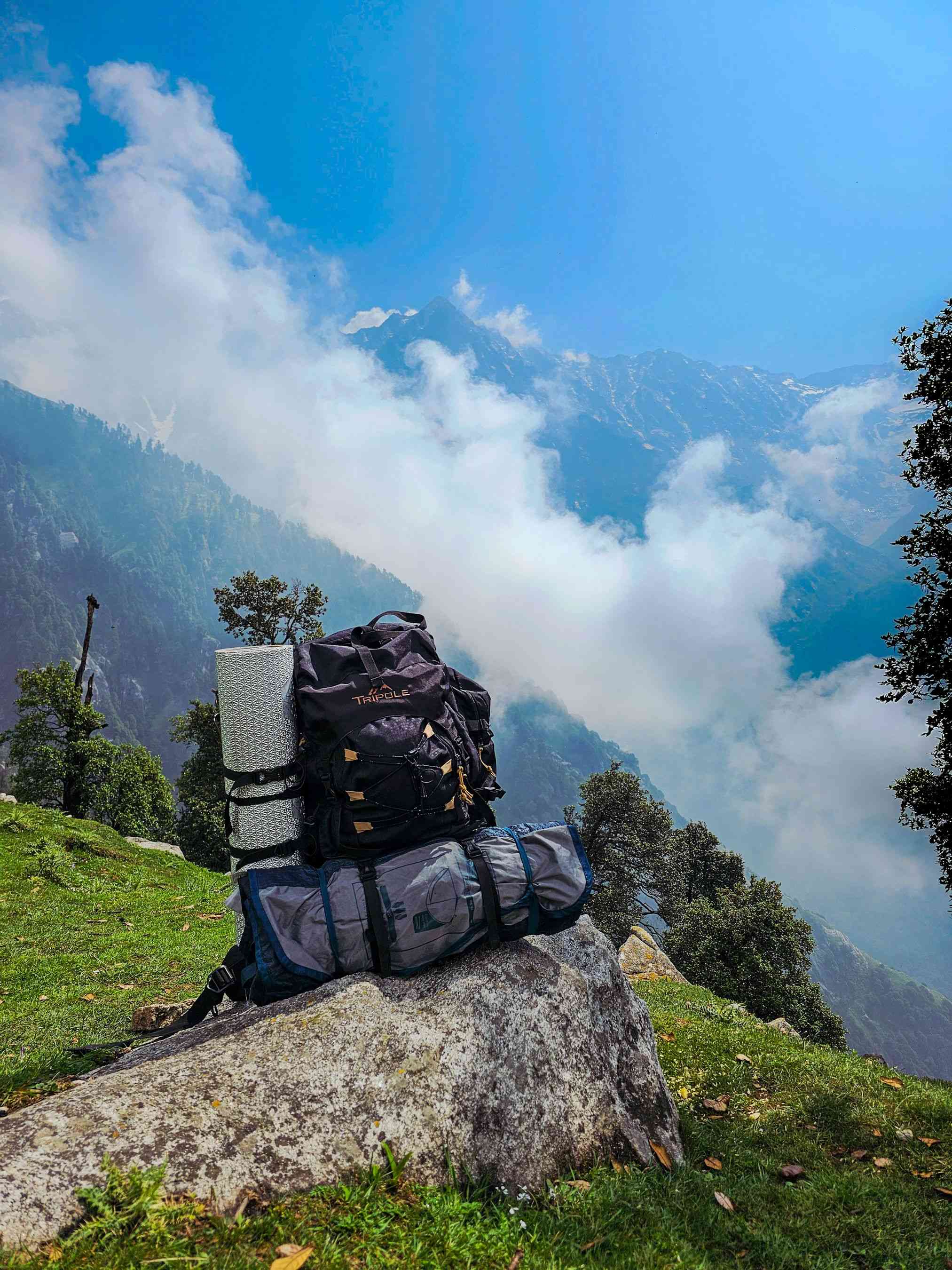
Packing correctly is one of the easiest ways to improve your trekking experience. The weather in the Himalayas can change rapidly, and conditions on the Hampta Pass Trek often vary considerably between morning, afternoon, and night.
The best approach is to focus on layering. Instead of carrying one extremely heavy jacket, it is far more practical to wear multiple layers that can be adjusted according to temperature and activity levels.
A moisture-wicking base layer helps keep sweat away from the body during steep climbs. A fleece jacket provides warmth during breaks, while a lightweight down jacket becomes essential after sunset when temperatures fall sharply at higher camps.
Because the trek is most popular during the monsoon season, rain protection is extremely important. A waterproof jacket, backpack rain cover, and waterproof bags for electronics should be considered essential items rather than optional extras.
Footwear deserves special attention. The trail includes rocky sections, muddy paths, stream crossings, and occasional snowfields. A sturdy pair of waterproof trekking boots with good grip can make a huge difference in both comfort and safety.
Sun protection is another item that many people underestimate. High-altitude sunlight is surprisingly strong, even on cloudy days. Sunglasses, sunscreen SPF 50+++, and lip balm should always be part of your packing list.
Other useful items include a headlamp, power bank, reusable water bottle, personal medications, Knee Support, Electrolytes, trekking poles, and a small first-aid kit. Trekking poles are especially helpful during the descent from Hampta Pass, where loose rocks and steep sections can place extra strain on the knees.
The most common packing mistake is bringing too much. Every extra kilogram feels heavier as altitude increases. A lighter backpack almost always leads to a more enjoyable trek.
Hampta Pass Trek Permits and Cost
Before starting the trek, certain permissions are required to access protected sections of the route. These permits help support conservation efforts and regulate tourism within fragile mountain ecosystems.
If you join an organized trekking group, permits are usually arranged by the trekking operator and included within the package cost. Independent trekkers should check the latest regulations before departure, as requirements occasionally change.
For most Indian trekkers, a standard Hampta Pass Trek package generally costs between ₹7,000 and ₹15,000 depending on the operator, inclusions, and group size. This usually covers camping equipment, meals during the trek, guide services, permits, and transportation between Manali and the trailhead.
When transportation, accommodation in Manali, and personal expenses are included, most domestic travelers spend between ₹15,000 and ₹35,000 for the complete trip.
For international visitors, the overall budget typically ranges from $180 to $450 USD, depending on travel style and accommodation choices before and after the trek.
Travelers seeking greater comfort can expect to spend between ₹40,000 and ₹75,000+ ($500–900+ USD). This budget may include premium hotels in Manali, private transportation, customized trekking services, and smaller group departures.
Compared with many famous trekking destinations around the world, Hampta Pass offers exceptional value. Few routes provide such a dramatic transition between landscapes while remaining relatively affordable and accessible.
How to Reach the Hampta Pass Trek Starting Point
Every Hampta Pass adventure begins in Manali, one of the most famous mountain destinations in India. Located in the Kullu Valley, Manali serves as the gateway to numerous Himalayan trekking routes and mountaineering expeditions.
The nearest airport is Bhuntar Airport, situated approximately fifty kilometers from Manali. Flights connect the region with several major Indian cities, although mountain weather occasionally affects schedules.
Many trekkers prefer traveling by road. Overnight Volvo buses from Delhi and Chandigarh are popular because they are comfortable, economical, and widely available. The journey itself is scenic, following rivers and mountain roads as you gradually enter the Himalayas.
Travelers arriving by train usually reach Chandigarh first before continuing to Manali by road. Chandigarh offers excellent rail connections with major cities across India, making it a convenient option for domestic visitors.
Most trekkers spend at least one night in Manali before beginning the trek. This provides time to organize equipment, purchase any last-minute supplies, and allow the body to start adjusting to the higher altitude.
From Manali, a short drive of roughly one hour leads to Jobra, the official starting point of the trek. The road passes through forests, waterfalls, and mountain scenery that offer a preview of the adventure ahead.
Standing at Jobra with your backpack ready and the trail stretching into the valley is often the moment when the journey truly begins. The road ends, the mountains take over, and the next few days become entirely about walking through one of the most diverse landscapes in the Indian Himalayas.
Hampta Pass Trek Safety Tips
The Hampta Pass Trek is often described as beginner-friendly, but that should not be confused with being effortless. The route crosses a high mountain pass at 4,290 meters (14,100 feet), travels through remote valleys, and is exposed to rapidly changing Himalayan weather. Proper preparation and sensible decision-making are essential for a safe and enjoyable experience.
Weather is one of the biggest factors trekkers need to respect. Conditions can change within minutes, particularly during July and August. A clear morning may turn into rain, fog, or strong winds by afternoon. Carrying waterproof clothing and warm layers at all times is one of the simplest ways to stay comfortable and safe.
Altitude is another consideration. Although Hampta Pass is not among the highest treks in the Himalayas, the elevation is still significant. Some trekkers experience mild headaches, fatigue, or loss of appetite as they gain height. Walking at a steady pace, drinking enough water, and avoiding overexertion are often the best ways to reduce the risk of altitude-related problems.
River crossings require caution, especially after rainfall. Water levels can rise quickly, and glacial streams tend to become stronger later in the day as temperatures increase. Always follow the guidance of trek leaders during crossings and avoid attempting risky shortcuts.
Trekking insurance is highly recommended for international visitors and can also be valuable for domestic travelers. Medical evacuations in remote mountain regions can be expensive and complicated.
Perhaps the most important safety rule is to listen to your body. The mountains are not a place to ignore warning signs. If symptoms become severe or unusual, it is always better to communicate with guides and take appropriate action rather than pushing forward unnecessarily.
Responsible Trekking and Leave No Trace
The beauty of Hampta Pass exists because much of the region remains relatively untouched. As trekking becomes increasingly popular, preserving these landscapes becomes a shared responsibility.
One of the simplest principles is to leave the mountains exactly as you found them. Everything carried into the mountains should also be carried back out. Plastic wrappers, bottles, food packaging, and other waste have no place on the trail.
Reusable water bottles are a far better choice than disposable plastic bottles. Most trekking groups provide purified drinking water, making single-use plastics largely unnecessary.
The alpine ecosystem surrounding Hampta Pass is more fragile than it appears. Plants growing at high altitude often require years to recover from damage. Staying on established trails helps minimize environmental impact while protecting delicate vegetation.
Respect for local communities is equally important. The valleys and grazing grounds used by trekkers have supported local shepherds and mountain communities for generations. Simple gestures such as asking permission before taking photographs and respecting local customs contribute to a more positive relationship between visitors and residents.
Noise pollution is another issue that many travelers overlook. One of the greatest rewards of trekking is experiencing the natural sounds of the mountains. Keeping music and loud conversations to a minimum helps preserve that experience for everyone.
Responsible trekking is not complicated. It simply means leaving the mountains in the same condition that inspired you to visit them in the first place.
If you’re looking for another incredible trekking experience in Nepal, the Gokyo Lakes Trek is a great option to explore. It’s known for its peaceful trails, beautiful glacial lakes, and the unforgettable view from Gokyo Ri. You can check the full details here: Gokyo Lakes Trek in Nepal (2026 Complete Guide). It’s especially recommended for those who prefer fewer crowds compared to the main Everest Base Camp route.
Hampta Pass Trek FAQs
Is the Hampta Pass Trek suitable for beginners?
Yes. Hampta Pass is widely considered one of the best Himalayan treks for beginners. The trail does not require technical climbing skills, and the duration is relatively short. However, a basic level of fitness is still important.
What is the highest point on the trek?
The highest point is Hampta Pass itself, which stands at approximately 4,290 meters (14,100 feet) above sea level.
How many days does the Hampta Pass Trek take?
Most itineraries require four to five days of trekking, excluding travel time to and from Manali.
What is the best time to do the Hampta Pass Trek?
The trekking season generally runs from June to September. July and August offer lush green landscapes, while September provides clearer skies and better mountain views.
Is Hampta Pass difficult?
The trek is usually rated as easy to moderate. The pass-crossing day is physically demanding but manageable for reasonably fit trekkers.
Can I do the trek without a guide?
Experienced trekkers may complete the route independently under favorable conditions, but most visitors choose organized groups because of logistics, navigation, and safety considerations.
Is altitude sickness a concern?
Mild altitude symptoms can occur because the trek reaches over 4,000 meters. Proper hydration, pacing, and acclimatization help reduce risk.
Are there mobile networks on the trek?
Mobile coverage is extremely limited after leaving Manali. Most campsites have little or no reliable network access.
Are there charging facilities during the trek?
Generally, no. Trekkers should carry power banks to keep phones, cameras, and other devices charged.
What are the nighttime temperatures like?
During the trekking season, temperatures at higher camps can range from around 5°C to below freezing, depending on the month and weather conditions.
Is Chandratal Lake included in the trek?
Many trekking itineraries include a visit to Chandratal Lake after reaching Chatru, although access depends on weather and road conditions.
What kind of accommodation is available?
Accommodation consists primarily of tents at designated campsites. Hotels and guesthouses are available before and after the trek in Manali.
Are there washroom facilities?
Organized trekking groups usually provide basic toilet tents at campsites. Facilities are simple but functional.
Do I need special trekking gear?
No technical mountaineering equipment is required. Good trekking boots, warm clothing, rain protection, and a suitable backpack are generally sufficient.
How fit should I be?
You should be comfortable walking for five to seven hours a day on uneven terrain. Regular walking, jogging, cycling, or stair climbing before the trek is usually enough preparation.
Is the Hampta Pass Trek worth doing?
For many trekkers, Hampta Pass offers one of the best combinations of scenery, accessibility, adventure, and landscape diversity in the Indian Himalayas.
If the dramatic transition of Hampta Pass left you craving for more Himalayan grandeur, then the Annapurna Base Camp Trek should be next on your list. While Hampta gives you a taste of alpine beauty, the ABC trek takes you deep into the heart of the sanctuary, surrounded by towering 8,000-meter giants. It is an entirely different level of challenge and reward that every serious trekker should experience at least once.
Final Thoughts on the Hampta Pass Trek
Some Himalayan treks are famous because they lead to a particular summit. Others are known for a single lake or viewpoint. Hampta Pass leaves a lasting impression for a different reason—it constantly changes.
Over the course of just a few days, you move through forests, cross rivers, walk across alpine meadows, climb a high mountain pass, and descend into a cold desert landscape that feels completely disconnected from where the journey began.
That variety is what makes Hampta Pass so memorable. Every day introduces a new environment, a new perspective, and a new reason to stop and appreciate the mountains around you.
For first-time trekkers, it offers an excellent introduction to high-altitude trekking without requiring weeks of commitment. For experienced hikers, it remains one of the most rewarding short treks in India thanks to its remarkable diversity and ever-changing scenery.
Long after the trek is over, most people remember not just the moment they stood on Hampta Pass itself, but the smaller experiences along the way—the sound of rivers at Chika, the vast openness of Balu Ka Ghera, the dramatic descent into Lahaul, and the feeling of waking up each morning surrounded by mountains.
If you’re looking for a Himalayan trek that delivers far more than its distance suggests, the Hampta Pass Trek remains one of the finest adventures Himachal Pradesh has to offer.
Once you have conquered the pass and are ready to push your boundaries for a longer, more immersive cultural adventure, the Manaslu Circuit Trek is waiting. This trek is not just about the mountains; it’s a journey through remote Nepalese villages and high-altitude Buddhist culture. It’s the next logical step for anyone who has mastered shorter Himalayan passes and wants to experience true mountain isolation.
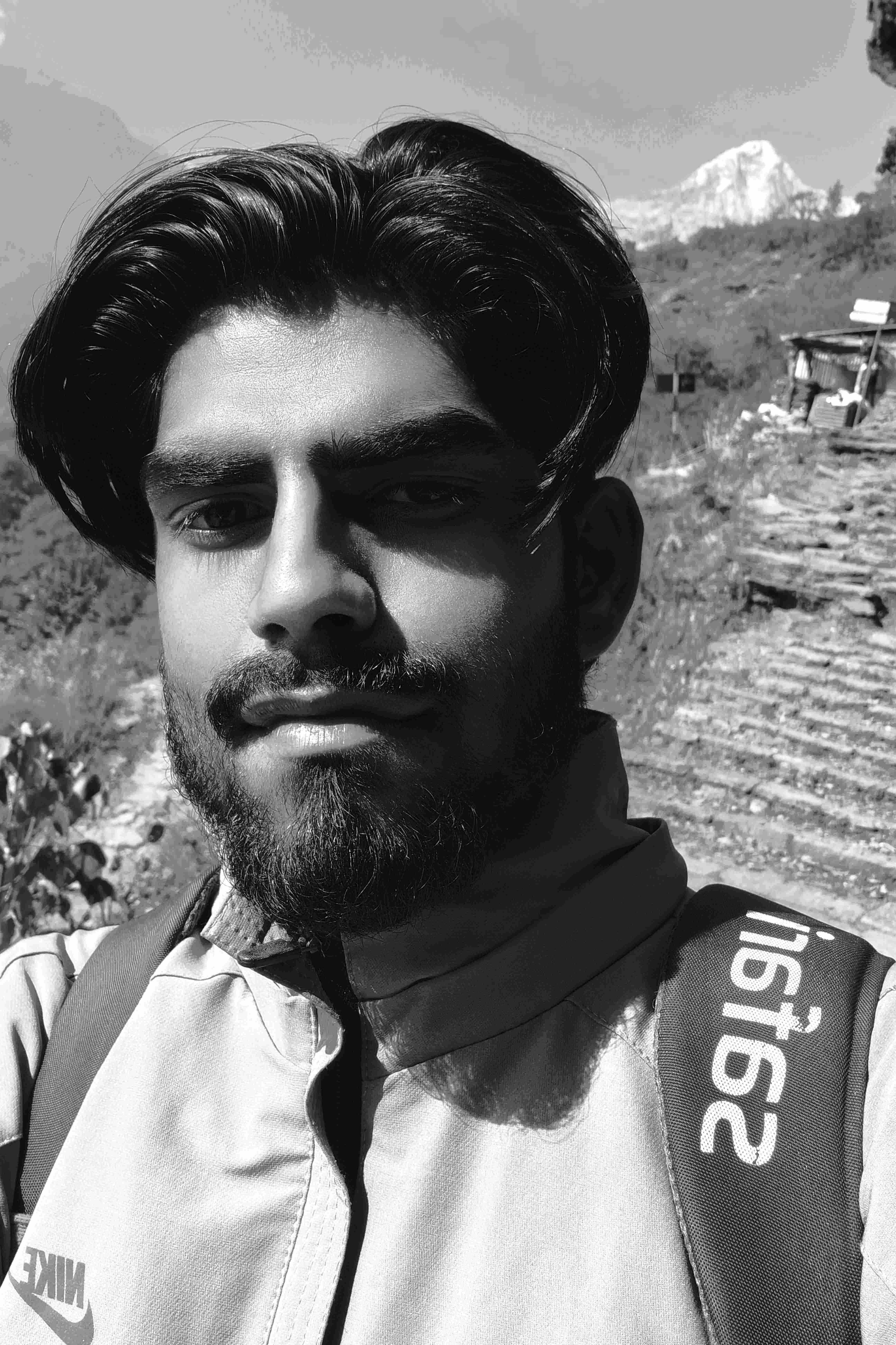
ABOUT AUTHOR
Afjal Khan
Afjal Khan is the founder of Epic Himalayan Trails and a passionate Himalayan trekker. He shares trekking guides, route information, itineraries, and practical travel tips to help trekkers plan better journeys across Nepal and the Indian Himalayas. Through Epic Himalayan Trails, his goal is to make trekking information simple, reliable, and useful for both beginners and experienced trekkers.