Trek Overview
Valley of Flowers Trek is one of the most beautiful and beginner-friendly Himalayan treks in India, attracting nature lovers, photographers, trekkers, and adventure seekers from around the world every year. Hidden deep within the mountains, this UNESCO World Heritage Site is famous for its extraordinary alpine meadows, rare Himalayan flowers, dramatic monsoon landscapes, and a peaceful atmosphere that feels completely different from most trekking destinations in India.
What makes the Valley of Flowers trek special is that it does not rely on a summit, a difficult pass, or a thrilling adventure element to impress trekkers. Instead, it offers an experience built around nature, biodiversity, and the simple joy of walking through one of the most beautiful valleys in the Himalayas.
The journey begins from Govindghat, a small town located on the banks of the Alaknanda River. From here, trekkers gradually move towards Ghangaria through forests, river valleys, waterfalls, and mountain trails. Ghangaria serves as the base camp for both the Valley of Flowers and Hemkund Sahib.
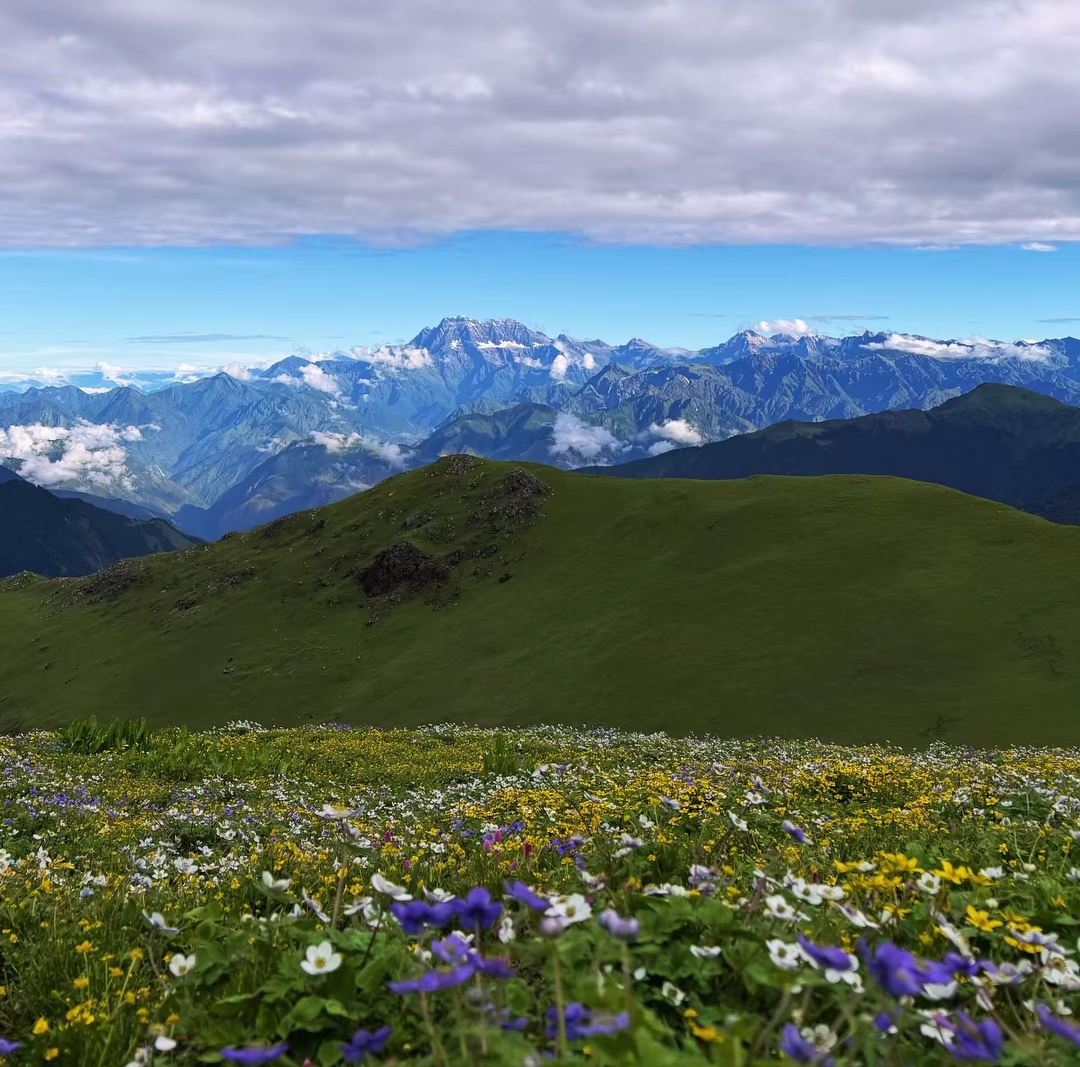
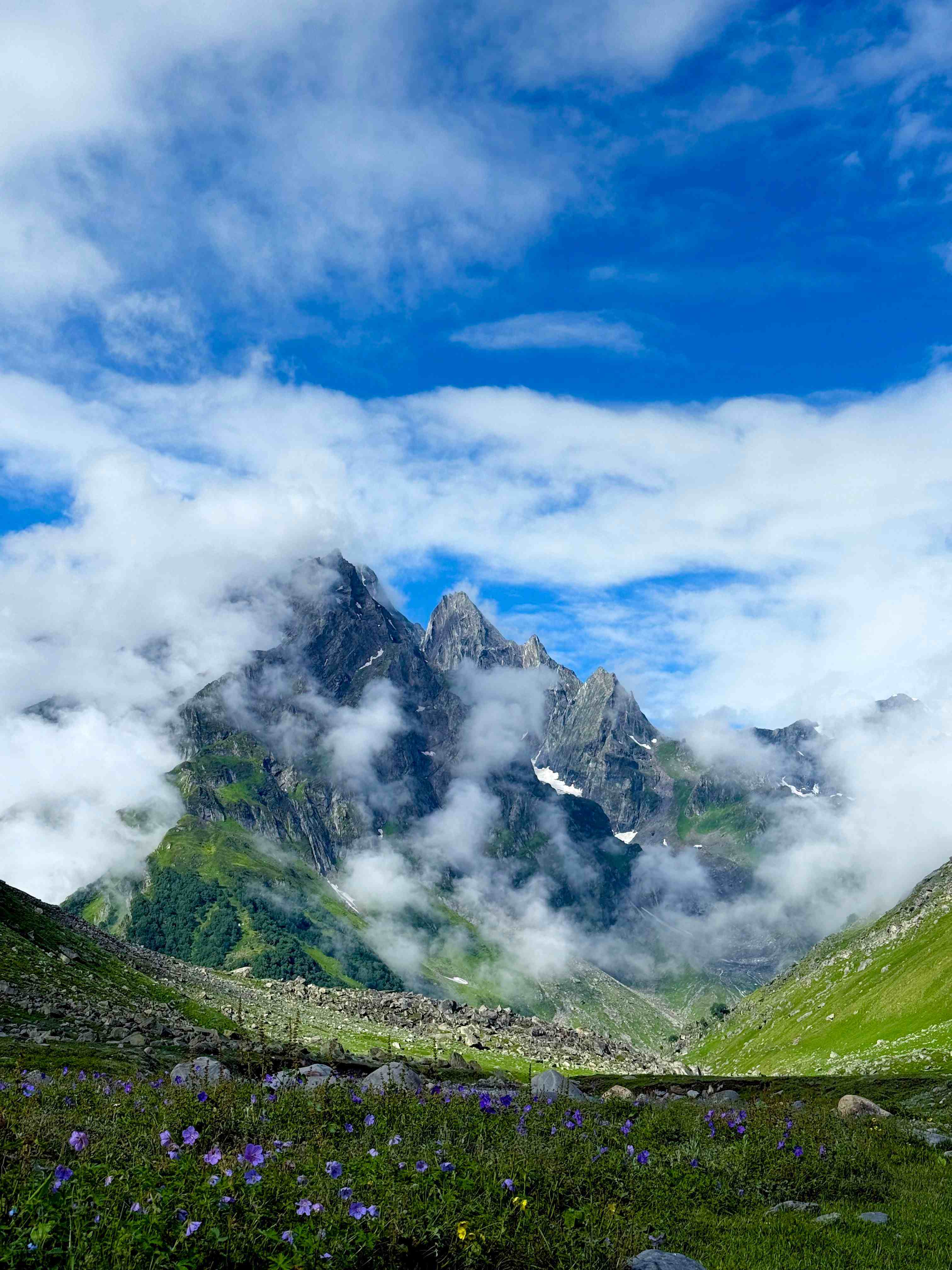
Once you enter the national park, the landscape changes dramatically. Dense forests slowly give way to open alpine meadows. Streams cut across the valley floor, wildflowers bloom in every direction, and clouds drift through the mountains creating a scene that often feels more like a painting than reality.
One of the biggest reasons behind the popularity of the Valley of Flowers trek is its accessibility. Unlike many Himalayan treks that require prior trekking experience, this route is suitable for beginners who have a reasonable level of fitness. At the same time, the scenery is so rewarding that even experienced trekkers rank it among their favorite Himalayan journeys.
For photographers, nature enthusiasts, bird watchers, botanists, and travelers looking to experience the softer side of the Himalayas, the Valley of Flowers trek remains one of the most rewarding adventures in India.
Why This Trek Is Worth It
Every trek in the Himalayas offers something different. Some are known for snow-covered peaks. Others are famous for summit climbs or challenging terrain. The Valley of Flowers trek stands apart because it focuses on beauty, detail, and immersion rather than difficulty.
One thing many trekkers do not expect is how emotional the experience can feel. You arrive expecting flowers, but what stays with you is the atmosphere of the valley itself.
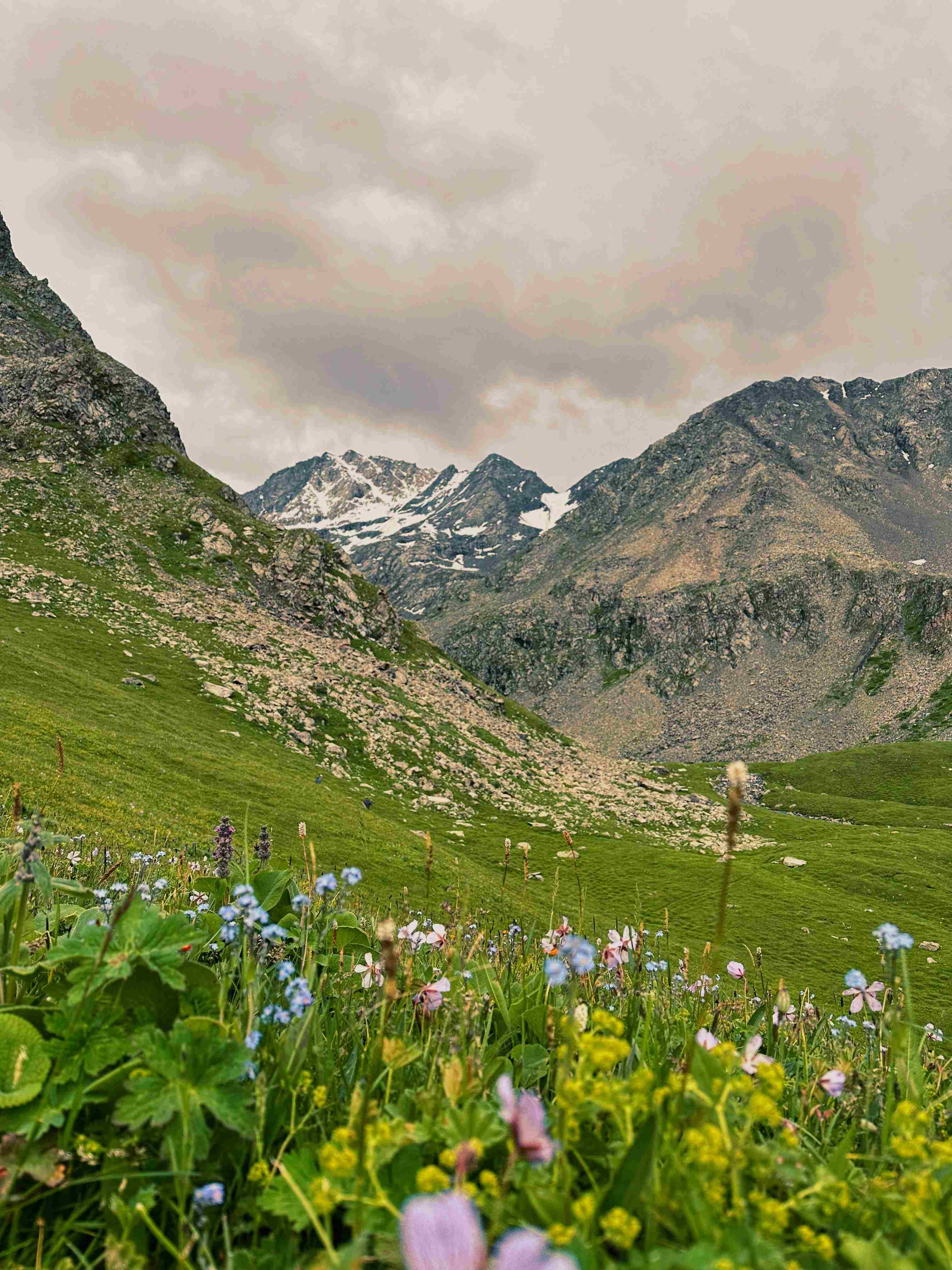
The landscape changes constantly throughout the day. In the morning, thick mist may cover the entire valley. A few hours later, sunlight suddenly breaks through the clouds and reveals thousands of flowers scattered across the meadows. Then rain arrives, changing the mood once again.
This constant transformation makes every visit unique.
Unlike many treks where the objective is to reach a summit, the Valley of Flowers encourages you to slow down. You notice small details that might otherwise go unnoticed. A butterfly resting on a flower. Water droplets shining on leaves after rain. The sound of a distant stream cutting through the silence.
The trek also offers a fascinating blend of nature and spirituality. The route overlaps with pilgrims traveling to Hemkund Sahib, one of the holiest Sikh pilgrimage sites in India. As a result, the trail has a unique atmosphere where adventure, faith, and nature coexist.
Another reason why this trek is worth doing is its ecological significance. The valley contains hundreds of species of flowering plants and serves as an important habitat for Himalayan wildlife. Walking through the national park feels less like visiting a tourist destination and more like stepping into a living ecosystem.
Compared to popular Himalayan treks such as Kedarkantha, Brahmatal, or Dayara Bugyal, the Valley of Flowers is less about challenge and more about observation. It rewards patience rather than speed.
That is what makes it memorable.
Valley of Flowers Trek Quick Facts
| Trek Detail | Information |
|---|---|
| Trek Name | Valley of Flowers Trek |
| Location | Chamoli District, Uttarakhand, India |
| Region | Garhwal Himalayas |
| Maximum Altitude | 3,658 meters (12,001 ft) |
| Trek Distance | Approximately 38–42 km (Round Trip) |
| Duration | 5–6 Days |
| Difficulty Level | Easy to Moderate |
| Starting Point | Govindghat |
| Base Camp | Ghangaria |
| Trek Type | Out-and-Back Himalayan Valley Trek |
| Accommodation | Guesthouses, Homestays, and Basic Lodges |
| Nearest Airport | Jolly Grant Airport, Dehradun |
| Nearest Railway Station | Rishikesh Railway Station |
| Best Time to Visit | July to September |
| Mobile Network | Limited Connectivity Beyond Govindghat |
| Suitable For | Beginners, Families, Nature Lovers, Photographers, and Solo Travelers |
| Trail Condition | Well-Defined and Easy to Follow During Trekking Season |
| Main Highlights | UNESCO World Heritage Site, Alpine Flowers, Waterfalls, Himalayan Views, Rich Biodiversity |
Best Time to Visit
The Valley of Flowers trek is highly seasonal, and the timing of your visit will significantly influence what you see.
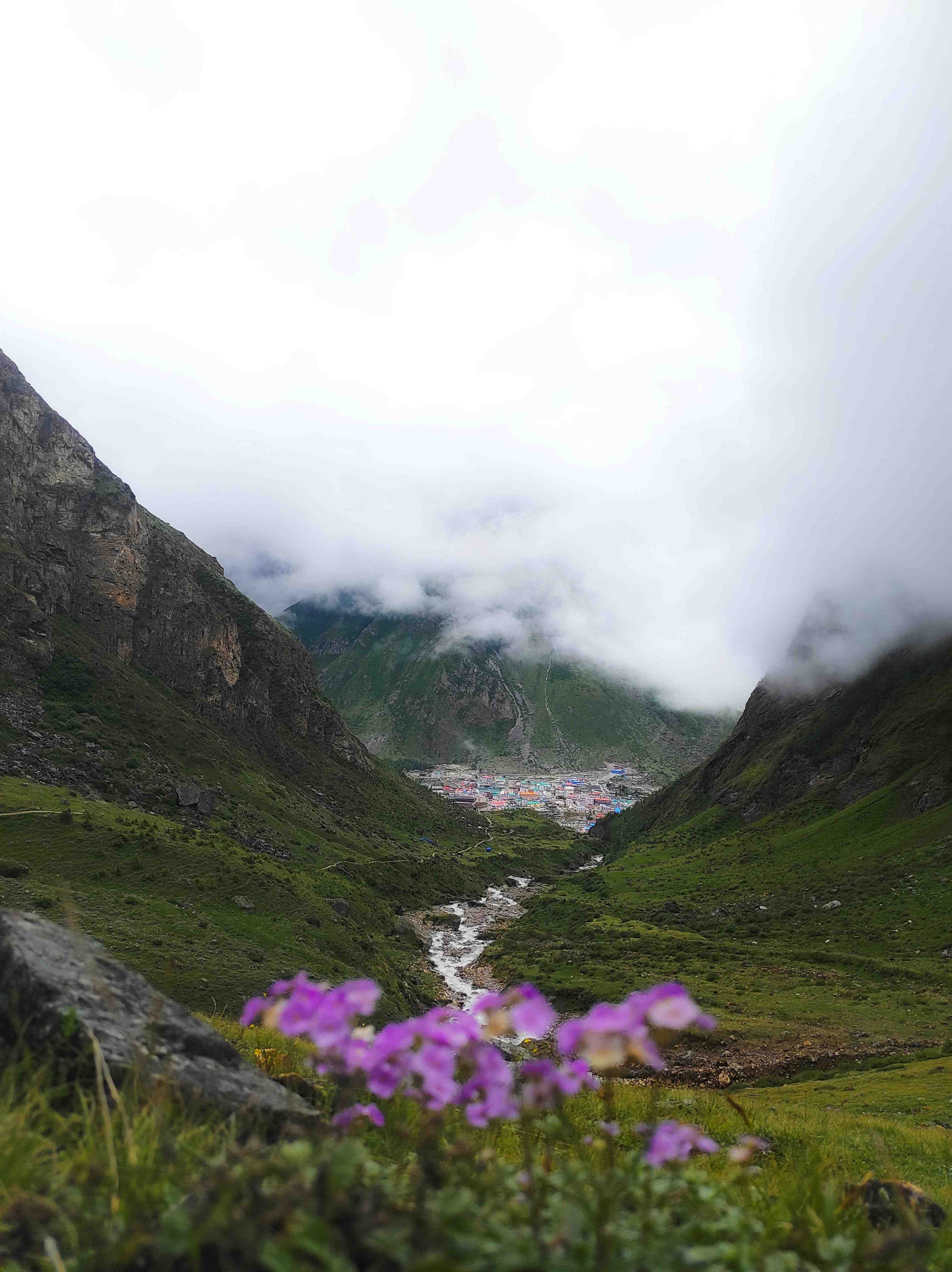
Unlike mountain treks that remain visually similar throughout the trekking season, the Valley of Flowers changes every few weeks. Different flowers bloom at different times, weather patterns shift constantly, and the overall character of the valley evolves throughout the season.
June marks the opening phase of the trek. Snow begins melting from the valley, streams become active, and fresh greenery starts appearing. Although flower density remains relatively low, the trails feel peaceful and uncrowded.
July introduces the monsoon and the first major bloom cycle. The valley becomes greener, waterfalls grow stronger, and colorful flowers begin appearing across large sections of the landscape. Rainfall becomes frequent, but the valley starts looking increasingly vibrant.
August is widely regarded as the best month for the Valley of Flowers trek. During this period, the valley reaches peak bloom. Thousands of flowers create a spectacular display of color, attracting trekkers, photographers, and nature lovers from around the world.
September offers a different experience. While many flowers begin fading, the weather becomes more stable and mountain views improve significantly. Clear skies allow trekkers to appreciate the surrounding Himalayan peaks in greater detail.
If your priority is seeing flowers at their peak, July and August are ideal. If you prefer clearer weather and panoramic mountain views, September is often the better choice.
Month by Month Weather Experience
Understanding weather conditions is essential before planning the trek because the Himalayan monsoon has a major influence on trail conditions and overall comfort.
June usually feels cool and fresh. Temperatures generally range between 7°C and 18°C. Snowmelt feeds streams and waterfalls, while the trail remains relatively quiet compared to peak season.
July brings increased rainfall and higher humidity. Temperatures remain comfortable, but trekkers should be prepared for regular showers. Rain gear becomes essential during this period.
August experiences the most dramatic transformation. Rain continues to be frequent, but this is also when the valley displays its richest colors. Mist, clouds, flowers, and waterfalls combine to create some of the most beautiful scenery found anywhere in the Indian Himalayas.
September is calmer and clearer. Rainfall decreases significantly, visibility improves, and the surrounding mountains become more prominent. Night temperatures begin dropping, creating colder mornings and evenings.
Regardless of the month, weather in the Himalayas remains unpredictable. Sunshine, rain, fog, and strong winds can all occur on the same day.
Trekkers should always prepare for changing conditions.
Difficulty Level Explained
The Valley of Flowers trek is often marketed as an easy trek, but that description can be slightly misleading.
The route is not technically difficult. There are no glacier crossings, rope sections, exposed ridges, or dangerous mountain passes. However, the trek still requires endurance because of the continuous uphill walking involved.
The biggest challenge comes on the route between Govindghat and Ghangaria. The trail climbs steadily for several hours and covers a significant distance in a single day. While the gradient is generally manageable, the continuous ascent can be tiring for beginners.
Altitude is another factor that should not be underestimated. Ghangaria sits above 3,000 meters, and the Valley of Flowers itself is located at an even higher elevation. Some trekkers may experience mild altitude-related symptoms such as headaches, fatigue, or reduced appetite.
Weather can also increase the perceived difficulty. Rain-soaked trails become slippery, while cold temperatures can make long walking days feel more demanding.
For physically active individuals, the trek is relatively straightforward. For completely sedentary individuals, some preparation is recommended before arrival.
A basic fitness routine involving walking, stair climbing, jogging, or cycling for a few weeks before the trek can significantly improve comfort on the trail.
The Valley of Flowers trek is best described as an easy-to-moderate Himalayan trek suitable for beginners who are willing to prepare properly and walk consistently for several hours each day.
Trek Highlights (Real Experience on the Trail)
The Valley of Flowers trek does not reveal its beauty immediately.
Instead, it unfolds gradually.
The journey begins long before the actual trek starts. The drive through the Garhwal Himalayas introduces you to deep valleys, roaring rivers, mountain villages, and winding roads that follow the course of the Alaknanda River.
As you approach Govindghat, the landscape begins feeling more remote. The mountains appear taller, the valleys become narrower, and the sense of entering the Himalayas grows stronger.
The trail to Ghangaria offers its own rewards. Dense forests, suspension bridges, waterfalls, and rivers accompany trekkers throughout the route. During the monsoon season, countless temporary waterfalls emerge from cliffs and hillsides, creating an atmosphere that feels almost magical.
Small tea stalls along the trail provide opportunities to rest, enjoy a hot cup of tea, and interact with fellow trekkers and pilgrims.
Ghangaria itself has a unique character. During trekking season, the settlement becomes a temporary mountain town filled with travelers from different backgrounds, all sharing the same trail.
But the true highlight arrives the moment you enter the Valley of Flowers National Park.
The transition feels dramatic.
The forests slowly disappear, the landscape opens up, and suddenly an enormous alpine valley stretches before you. Streams flow through the meadows, clouds drift across the mountains, and flowers appear in every direction.
The valley never looks exactly the same for long. Weather constantly changes its appearance. Sunlight creates vibrant colors, mist adds mystery, and rain brings an entirely different mood.
Many trekkers arrive expecting flowers and leave remembering something much bigger—the feeling of being completely immersed in nature.
Route Overview
The Valley of Flowers trek follows a straightforward route that is easy to understand and follow.
The journey begins at Govindghat and continues to Pulna before reaching Ghangaria, which serves as the main trekking base.
From Ghangaria, trekkers visit the Valley of Flowers National Park and return the same day. Those interested in visiting Hemkund Sahib can undertake an additional day hike before descending back to Govindghat.
Although the route itself is simple, weather conditions, altitude, and daily walking distances still require proper planning and preparation.
The simplicity of the route is one reason why the trek remains accessible to a wide range of travelers while still delivering a genuine Himalayan experience.
Route & Day-by-Day Itinerary of Valley of Flowers Trek
The Valley of Flowers trek itinerary looks simple when viewed on a map, but the actual experience feels much richer than the distances suggest. Every day introduces a new landscape, a different atmosphere, and a deeper connection with the mountains.
One of the reasons this trek is so popular among beginners is that the route is straightforward. At the same time, the gradual altitude gain and changing weather ensure that the journey still feels like a genuine Himalayan adventure.
Day 1 – Rishikesh to Govindghat (Drive Journey)
The journey usually begins from Rishikesh, the gateway to the Garhwal Himalayas. Most trekkers start early in the morning because the drive to Govindghat is long and takes the better part of the day.
As you leave the plains behind, the landscape begins changing rapidly. The road follows the Alaknanda River and passes through several important mountain towns. The drive itself becomes a memorable part of the adventure because every few hours the scenery seems to become more dramatic.
One of the highlights of the route is passing through the famous Prayags of Uttarakhand, where rivers meet before continuing their journey through the Himalayas. Deep valleys, steep mountain slopes, and river gorges dominate the scenery throughout the day.
By evening, you arrive at Govindghat. This small mountain town serves as the starting point for both the Valley of Flowers Trek and the Hemkund Sahib pilgrimage.
The atmosphere here is energetic during the trekking season. Pilgrims, trekkers, local shopkeepers, and transport operators create a lively environment that contrasts sharply with the silence you will experience deeper in the mountains.
Most trekkers spend the night here preparing their gear and getting ready for the climb ahead.
Day 2 – Govindghat to Ghangaria Trek
This is often considered the most physically demanding day of the trek.
The trail starts from Govindghat and gradually ascends towards Ghangaria. The route follows the Pushpawati River and remains uphill for most of the journey.
At first, the climb feels manageable. The path is well-defined, and the excitement of starting the trek keeps energy levels high. However, as the hours pass, the steady ascent begins testing endurance.
Pulna village marks an important point on the route. Beyond this point, the trekking environment becomes increasingly remote and scenic.
One of the most enjoyable aspects of this day’s trek is the constant presence of water. Rivers, streams, waterfalls, and small cascades appear throughout the route. During the monsoon season, the mountains seem alive with flowing water.
Tea stalls located at intervals along the trail provide welcome opportunities to rest. A simple cup of tea often feels surprisingly refreshing after a few hours of climbing.
The forests become denser as you gain altitude. Pine, oak, and other Himalayan trees create shaded sections that make walking more comfortable.
After several hours of steady climbing, Ghangaria finally appears.
This small settlement sits surrounded by mountains and acts as the base camp for both major attractions in the region. During the trekking season, the village becomes a temporary home for hundreds of trekkers and pilgrims.
The sense of achievement upon reaching Ghangaria is significant because the hardest sustained climb of the trek is now behind you.
Day 3 – Ghangaria to Valley of Flowers Exploration
For many trekkers, this is the most anticipated day of the entire journey.
The route from Ghangaria to the Valley of Flowers National Park is shorter than the previous day’s climb, but it delivers some of the most memorable scenery in the Indian Himalayas.
The morning usually begins early. Weather conditions are often better during the first half of the day, and many trekkers prefer entering the valley before larger crowds arrive.
Initially, the trail passes through forested sections and follows a gradual ascent. Nothing immediately prepares you for what lies ahead.
Then the landscape begins opening up.
The forest starts thinning, the valley widens, and small patches of flowers begin appearing beside the trail.
As you move deeper into the national park, the scale of the valley becomes apparent.
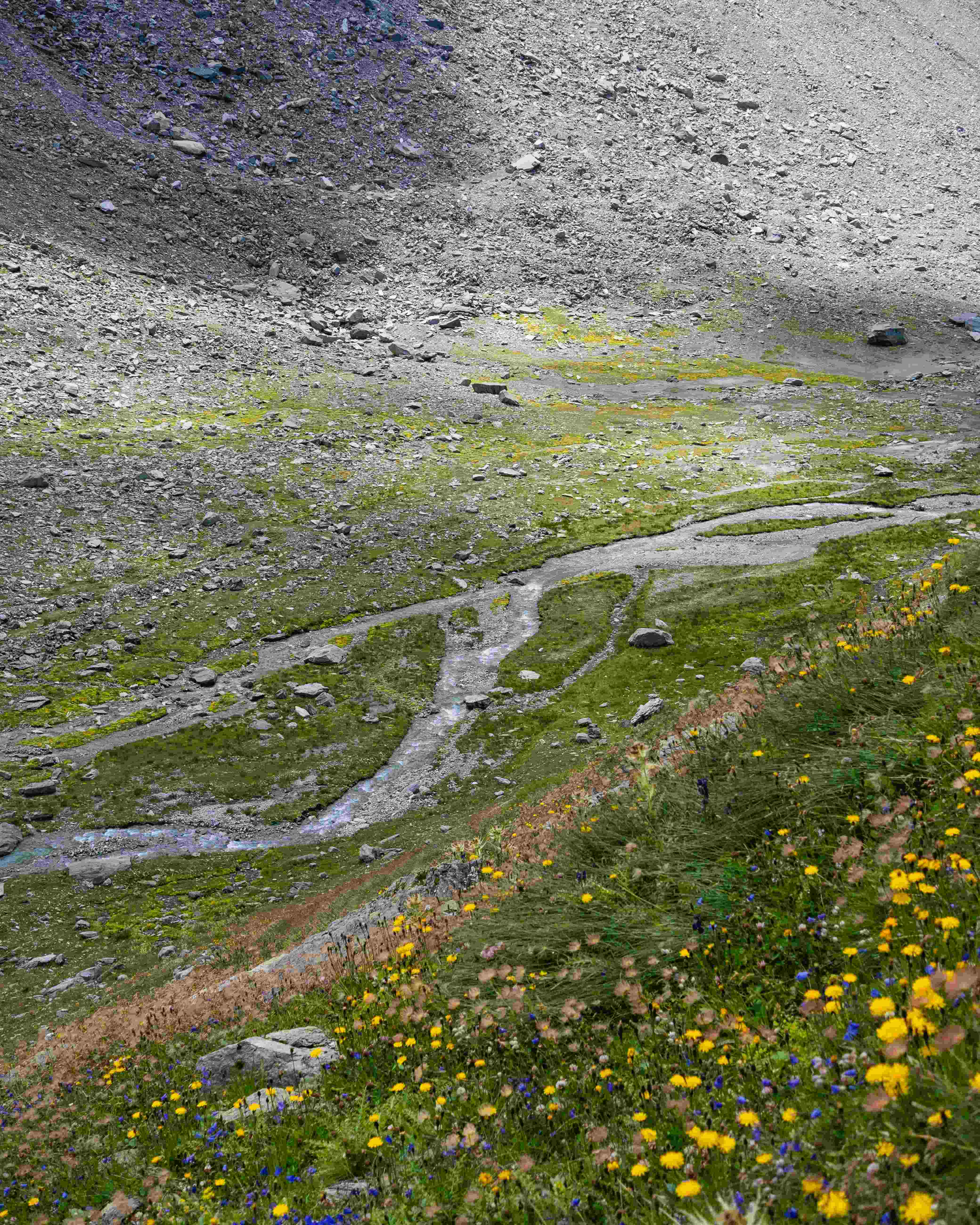
Large meadows stretch into the distance. Streams weave through the landscape. Waterfalls descend from surrounding mountains. Wildflowers bloom in every direction.
What makes the experience so unique is that the valley never appears static. Clouds drift across the mountains, sunlight breaks through unexpectedly, and mist moves across the meadows creating constantly changing scenery.
Some sections contain dense concentrations of flowers, while others feel more open and untouched. This variation keeps the experience interesting throughout the exploration.
Many trekkers discover that the best way to enjoy the valley is simply to slow down. Instead of rushing from one point to another, they spend time observing small details and appreciating the atmosphere.
After several hours of exploration, trekkers return to Ghangaria for the night.
Although the distance covered during the day is relatively modest, the experience often becomes the emotional highlight of the entire trek.
Day 4 – Optional Hemkund Sahib Trek or Rest Day
This day offers flexibility depending on personal preference and energy levels.
Many trekkers choose to attempt the climb to Hemkund Sahib, while others prefer spending a relaxed day in Ghangaria.
The trek to Hemkund Sahib is considerably steeper than the route to the Valley of Flowers. The climb gains altitude quickly and demands more physical effort.
The trail consists of continuous uphill walking, and many trekkers find it more challenging than they initially expected.
However, the rewards are equally impressive.
Hemkund Sahib is one of the highest Sikh pilgrimage sites in the world. A pristine glacial lake sits beside the gurudwara, surrounded by towering mountains that create a dramatic setting.
The atmosphere here feels very different from the Valley of Flowers.
While the valley is colorful, open, and vibrant, Hemkund Sahib feels peaceful, spiritual, and powerful.
The combination of natural beauty and religious significance leaves a lasting impression on many visitors.
For those who decide not to climb to Hemkund Sahib, spending an additional day exploring Ghangaria or simply resting can also be a rewarding choice.
Day 5 – Ghangaria to Govindghat Return Trek
The descent back to Govindghat marks the beginning of the return journey.
Although descending is generally faster than climbing, it should not be underestimated. Long downhill sections can place significant strain on the knees and ankles.
The route follows the same path used during the ascent, but the experience often feels different.
Many trekkers find themselves reflecting on the previous days while walking. Familiar waterfalls, bridges, and viewpoints now carry memories associated with the journey.
As altitude decreases, breathing becomes easier and temperatures gradually become warmer.
The descent usually takes less time than the ascent, allowing trekkers to reach Govindghat by afternoon or evening.
Returning to Govindghat often feels bittersweet. The comfort of civilization returns, but the wilderness experience begins coming to an end.
Day 6 – Return Journey to Rishikesh
The final day is dedicated to the long drive back towards Rishikesh.
The same mountain roads that introduced you to the Himalayas now carry you back towards the plains.
Interestingly, many trekkers notice that the landscape feels different on the return journey.
Places that seemed unfamiliar a few days earlier now feel recognizable. Rivers, valleys, and mountain towns appear less intimidating and more familiar.
The journey provides time to process the experience and revisit memories from the trek.
For many people, this is when they realize that the Valley of Flowers is not simply a place they visited. It is an experience that continues to stay with them long after they leave.
Altitude & Acclimatization on Valley of Flowers Trek
Altitude is one of the most important factors to consider while planning this trek.
Although the Valley of Flowers is not an extreme-altitude expedition, trekkers still gain significant elevation within a relatively short period.
Govindghat sits at approximately 1,800 meters above sea level. Ghangaria is located above 3,000 meters, while the Valley of Flowers itself reaches around 3,658 meters.
This increase in altitude is enough for some trekkers to experience mild symptoms related to reduced oxygen levels.
Common symptoms may include mild headaches, fatigue, reduced appetite, disturbed sleep, or slight dizziness.
In most cases, these symptoms remain manageable and improve naturally as the body adjusts.
Hydration plays an important role in acclimatization. Drinking sufficient water throughout the trek helps the body adapt more effectively.
Walking at a steady pace is equally important. Many beginners make the mistake of rushing uphill during the first day, which increases fatigue and makes altitude adjustment more difficult.
Weather conditions can also influence how altitude feels. Cold temperatures, rain, and strong winds may make trekkers feel more tired than expected.
The best approach is simple: walk slowly, maintain a comfortable pace, eat properly, stay hydrated, and listen to your body.
For most healthy individuals, acclimatization on the Valley of Flowers Trek happens naturally without major issues.
Food and Accommodation Experience
One of the advantages of the Valley of Flowers Trek is that trekkers do not need to camp throughout the journey.
Accommodation is available at both Govindghat and Ghangaria, making logistics relatively simple compared to many remote Himalayan treks.
Govindghat offers a range of hotels, lodges, and guesthouses. Most are basic but comfortable enough for a short stay before and after the trek.
Ghangaria serves as the primary trekking base. During the season, the village becomes busy with trekkers and pilgrims, and accommodation demand increases significantly.
Rooms are generally simple and functional. Luxury should not be expected, but essential facilities are available.
Electricity availability can vary depending on weather and local infrastructure. Power cuts are not uncommon during the monsoon season.
Food along the route is primarily vegetarian due to the religious significance of the region.
Typical meals include rice, dal, roti, vegetables, noodles, soups, and simple snacks.
Tea becomes an important part of the trekking experience. Many trekkers find themselves stopping frequently at tea stalls along the route.
Maggi noodles are equally popular and have become almost synonymous with Himalayan trekking culture.
While the food is simple, it is usually fresh, filling, and well suited to the physical demands of trekking.
For most trekkers, the combination of basic accommodation, warm meals, and mountain hospitality proves more than sufficient for a comfortable experience.
Packing List for Valley of Flowers Trek
Packing correctly can make a significant difference to your overall trekking experience. The weather in the Valley of Flowers region can change rapidly, especially during the monsoon season. A sunny morning can quickly turn into a rainy afternoon, followed by a cold evening.
The key principle is to pack light but smart.
A good-quality backpack with a rain cover should be one of your top priorities. Since rain is common throughout the trekking season, protecting your belongings from moisture is essential.
Clothing should be based on a layering system. Instead of carrying one heavy jacket, it is better to carry multiple lighter layers that can be added or removed depending on weather conditions.
A moisture-wicking T-shirt, trekking pants, fleece jacket, and waterproof outer layer usually work well for most trekkers.
Good trekking shoes are perhaps the most important item on the packing list. Trails often become muddy and slippery due to rain, so shoes with reliable grip and ankle support are highly recommended.
Extra socks are equally important. Wet feet can quickly become uncomfortable during long walking days.
A compact first-aid kit should include personal medications, pain relief tablets, bandages, antiseptic cream, and medicines for common trekking issues such as headaches or stomach discomfort.
Other useful items include sunglasses, sunscreen, a cap, gloves, a reusable water bottle, trekking poles, energy snacks, and a power bank.
The goal is not to carry everything possible. The goal is to carry only what you genuinely need.
Permits & Cost Breakdown (2026)
Entry into the Valley of Flowers National Park requires an official permit.
The permit is generally issued at the forest department check post near Ghangaria before entering the national park. Visitors are required to carry valid identification documents during the permit process.
Permit fees can change periodically, so trekkers should verify the latest charges before their trip.
The process itself is usually straightforward and does not require complicated advance arrangements for most visitors.
Apart from the entry permit, the total cost of the trek depends on several factors such as transportation, accommodation, food, guide services, and personal spending habits.
A budget trek typically involves shared transportation, basic guesthouses, and self-guided trekking.
A mid-range experience usually includes more comfortable accommodation and private transport for certain sections of the journey.
Premium packages offered by trekking operators may include transportation, accommodation, meals, permits, and guide support as part of a complete package.
One reason behind the popularity of the Valley of Flowers Trek is that it remains one of the most affordable multi-day Himalayan trekking experiences in India.
Compared to many high-altitude expeditions, the overall cost remains relatively accessible while still delivering world-class scenery.
How to Reach Govindghat
Reaching Govindghat is the first major step in planning the trek.
Although the Valley of Flowers itself can only be reached on foot, Govindghat is well connected to major cities in northern India.
Most trekkers begin their journey from Rishikesh, which serves as the primary gateway to the Garhwal Himalayas.
The nearest airport is Jolly Grant Airport in Dehradun. From there, travelers can continue towards Rishikesh and then proceed by road to Govindghat.
The nearest major railway station for most visitors is Rishikesh, although Haridwar also serves as a common arrival point.
From Rishikesh, buses, shared taxis, and private vehicles regularly travel towards Joshimath and Govindghat during the trekking season.
The road journey is long but incredibly scenic. Rivers, mountain towns, forests, and dramatic valleys accompany travelers throughout the route.
Many trekkers choose to spend a night in Joshimath before continuing to Govindghat, especially if they prefer a more relaxed itinerary.
Photography Guide for Valley of Flowers Trek
For photographers, the Valley of Flowers is a dream destination.
However, photographing the valley successfully requires patience because weather conditions constantly influence lighting and visibility.
Early morning is generally the best time for photography. Soft light, fewer crowds, and lingering mist create atmospheric conditions that can produce stunning images.
One common mistake is focusing only on wide landscape shots.
While panoramic views are beautiful, many of the most memorable photographs come from smaller details. Flowers covered with raindrops, insects resting on petals, flowing streams, and cloud formations often create stronger visual stories than distant landscapes.
Mobile phone cameras perform surprisingly well in the valley, particularly when natural light is available.
For DSLR and mirrorless camera users, carrying waterproof protection is extremely important. Rain can arrive suddenly and without warning.
Photographers should also remember that weather is part of the valley’s character. Mist, clouds, and light rain often create more dramatic images than clear skies.
Valley of Flowers vs Kedarkantha vs Brahmatal
Many trekkers compare the Valley of Flowers with Kedarkanth and Brahmatal because all three are popular beginner-friendly Himalayan treks.
However, the experiences they offer are very different.
Kedarkantha is primarily known as a winter trek. Snow-covered forests, frozen campsites, and a summit climb define the experience. It is ideal for trekkers looking for their first snow trek.
Brahmatal also attracts winter trekkers. Frozen lakes, panoramic mountain views, and snow-covered landscapes make it one of the most visually impressive winter routes in India.
The Valley of Flowers focuses on an entirely different aspect of the Himalayas.
Instead of snow, it celebrates biodiversity. Instead of summit views, it emphasizes meadows, flowers, rivers, and ecological richness.
For photographers and nature lovers, the Valley of Flowers often provides a more immersive experience because the beauty exists at every step rather than at a single viewpoint.
For adventure seekers looking specifically for snow and winter conditions, Kedarkantha or Brahmatal may be more suitable.
For those seeking natural beauty, biodiversity, and a unique Himalayan atmosphere, the Valley of Flowers remains difficult to match.
If the Valley of Flowers Trek inspires you to explore more of the Himalayas, there are several world-class trekking routes worth adding to your bucket list. The Kanchenjunga Circuit Trek offers a remote journey through one of the most pristine regions of the Eastern Himalayas, while the Everest Base Camp Trek takes you to the foot of the world’s highest mountain. For trekkers seeking diverse landscapes and traditional mountain culture, the Annapurna Circuit Trek is an excellent choice. In India, the Kashmir Great Lakes Trek is renowned for its turquoise alpine lakes and breathtaking meadows. Those looking for a quieter and more challenging adventure can consider the Manaslu Circuit Trek, a spectacular trail that circles one of Nepal’s highest peaks.
Who Should Do This Trek?
One of the greatest strengths of the Valley of Flowers Trek is its accessibility.
This trek is suitable for beginners who are attempting their first Himalayan trek.
It is also an excellent choice for families with older children who enjoy outdoor activities and nature-based travel.
Nature lovers often find the trek especially rewarding because of the extraordinary biodiversity present throughout the national park.
Bird watchers, botanists, wildlife enthusiasts, and photographers can spend hours observing details that many other trekking routes simply do not offer.
Solo travelers also frequently choose this trek because the route is well-established and attracts a steady flow of visitors during the season.
At the same time, experienced trekkers often appreciate the Valley of Flowers for completely different reasons. After completing physically demanding Himalayan expeditions, many enjoy returning to a trek that emphasizes beauty rather than challenge.
Safety Tips
The Valley of Flowers Trek is generally considered safe, but basic precautions remain important.
Weather conditions should always be respected. Heavy rainfall can make trails slippery and reduce visibility.
Trekkers should remain on designated routes and avoid wandering into restricted areas within the national park.
Altitude-related symptoms should never be ignored, even if they appear mild.
Proper footwear significantly reduces the risk of slips and falls, particularly during the monsoon season.
Travel insurance is highly recommended, especially for international visitors.
Because mobile connectivity remains limited in certain areas, it is wise to inform family members about your itinerary before starting the trek.
Preparation and awareness remain the most effective safety tools in the mountains.
Responsible Trekking & Leave No Trace
The Valley of Flowers is one of India’s most fragile mountain ecosystems.
Protecting it should be the responsibility of every visitor.
Flowers should never be picked, regardless of how tempting they may appear. Even small disturbances can affect the delicate balance of the ecosystem.
All waste should be carried back and disposed of properly.
Plastic usage should be minimized wherever possible.
Trekkers should remain on designated trails to avoid damaging vegetation.
Respect for local communities is equally important. The region holds both ecological and spiritual significance, and visitors should behave accordingly.
Responsible trekking ensures that future generations can experience the same beauty that exists today.
Frequently Asked Questions (FAQs) About Valley of Flowers Trek
1. Is the Valley of Flowers Trek suitable for beginners?
Yes, the Valley of Flowers Trek is considered one of the best beginner-friendly Himalayan treks in India. The trail is well-defined and does not require technical trekking skills. However, a basic level of fitness is recommended due to the continuous uphill sections between Govindghat and Ghangaria.
2. What is the best time to visit the Valley of Flowers?
The best time to visit the Valley of Flowers is from July to September. August is usually considered the peak blooming season when the valley is covered with thousands of colorful alpine flowers.
3. How difficult is the Valley of Flowers Trek?
The trek is generally rated as Easy to Moderate. While there are no technical challenges, trekkers need to walk several kilometers daily and gain significant altitude, making good physical fitness beneficial.
4. What is the total distance of the Valley of Flowers Trek?
The total trekking distance is approximately 38 to 42 kilometers round trip, depending on the route taken and whether Hemkund Sahib is included in the itinerary.
5. Do I need a permit for the Valley of Flowers Trek?
Yes, all visitors must obtain an entry permit to enter the Valley of Flowers National Park. Permits can be purchased at the forest check post near the entrance of the national park.
6. Is Hemkund Sahib included in the Valley of Flowers Trek?
Hemkund Sahib is not automatically included, but most trekkers visit it as an optional day hike from Ghangaria. The sacred Sikh pilgrimage site is located at an altitude of over 4,300 meters and offers stunning mountain views.
7. Are accommodation facilities available during the trek?
Yes, accommodation is available at Govindghat and Ghangaria. Trekkers can choose from budget guesthouses, homestays, lodges, and hotels during the trekking season.
8. Is mobile network available on the Valley of Flowers Trek?
Mobile connectivity is limited beyond Govindghat. Some networks may work intermittently in Ghangaria, but internet and phone signals are often unreliable in the higher mountain regions.
9. Can I do the Valley of Flowers Trek without a guide?
Yes, the trail is well-marked and many trekkers complete the trek independently. However, first-time visitors may choose a guide or trekking package for convenience and local support.
10. Which flowers can be seen in the Valley of Flowers?
The valley is home to more than 500 species of alpine flowers, including Blue Poppy, Cobra Lily, Himalayan Bellflower, Primulas, Marigolds, Anemones, and many other rare Himalayan plant species that bloom during the monsoon season.
11. Is camping allowed inside the Valley of Flowers National Park?
No, camping and overnight stays are strictly prohibited inside the Valley of Flowers National Park. Visitors must return to Ghangaria before the park closes each day.
12. What should I pack for the Valley of Flowers Trek?
Essential items include trekking shoes, rain gear, warm clothing, a backpack, water bottles, personal medicines, sunscreen, trekking poles, and waterproof covers for electronics because rain is common during the trekking season.
Final Thoughts
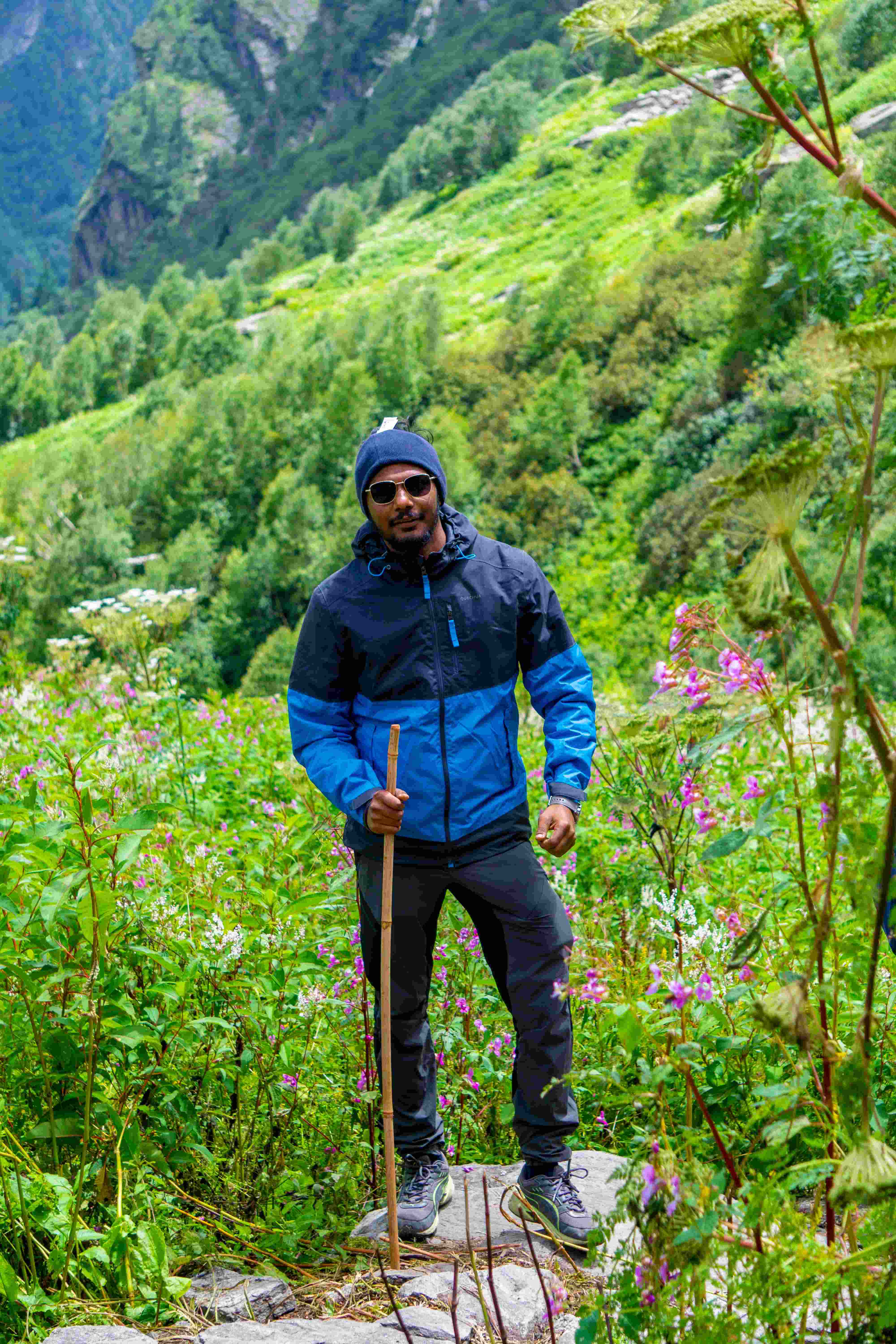
The Valley of Flowers Trek is not simply about reaching a destination.
It is about experiencing a landscape that feels alive.
It is about watching clouds drift across mountain meadows, listening to rivers flowing through silent valleys, and discovering beauty in places where nature remains largely untouched.
Some trekkers remember the flowers.
Others remember the rain, the mist, the waterfalls, or the peaceful atmosphere of Ghangaria.
Many remember the feeling of standing quietly in the middle of the valley while the weather changes around them.
That is what makes this trek special.
The Valley of Flowers does not overwhelm you with difficulty or adrenaline. Instead, it gradually draws your attention towards the details of the natural world.
And long after the trek ends, those details remain.
If you are looking for a beginner-friendly Himalayan trek that combines alpine meadows, rare flowers, mountain landscapes, and a unique spiritual atmosphere, the Valley of Flowers Trek 2026 remains one of the finest trekking experiences in India. With proper planning, the right season, and responsible trekking practices, this UNESCO World Heritage Site offers an unforgettable journey into the heart of the Garhwal Himalayas.
Beyond the Valley of Flowers Trek, passionate trekkers can continue their Himalayan journey on legendary routes such as the Everest Base Camp Trek, Annapurna Circuit Trek, Manaslu Circuit Trek, Kashmir Great Lakes Trek, and Kanchenjunga Circuit Trek. Each trek offers a unique blend of landscapes, culture, and adventure, making them excellent choices for your next mountain expedition.
ABOUT AUTHOR
Afjal Khan
Afjal Khan is the founder of Epic Himalayan Trails and a passionate Himalayan trekker. He shares trekking guides, route information, itineraries, and practical travel tips to help trekkers plan better journeys across Nepal and the Indian Himalayas. Through Epic Himalayan Trails, his goal is to make trekking information simple, reliable, and useful for both beginners and experienced trekkers.