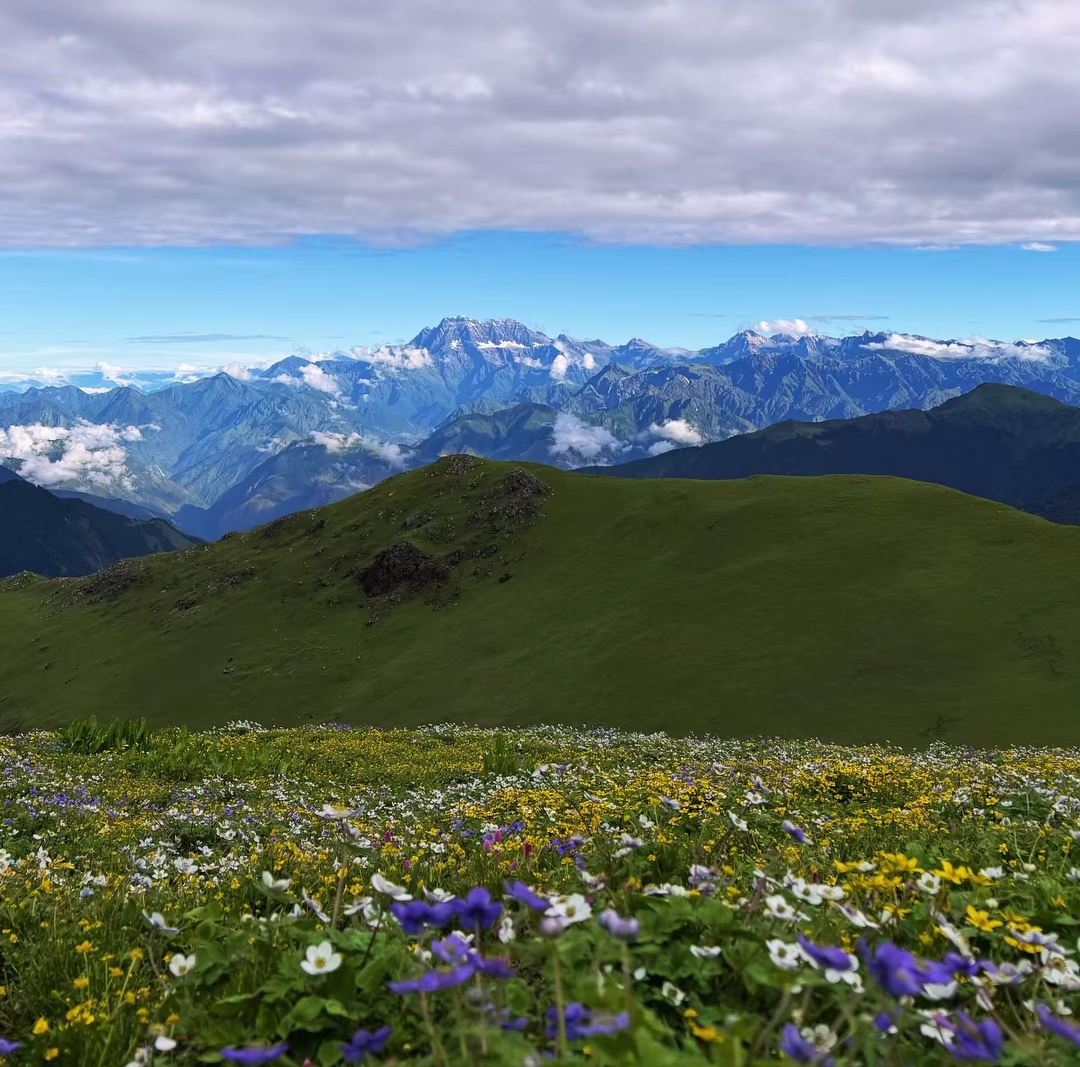
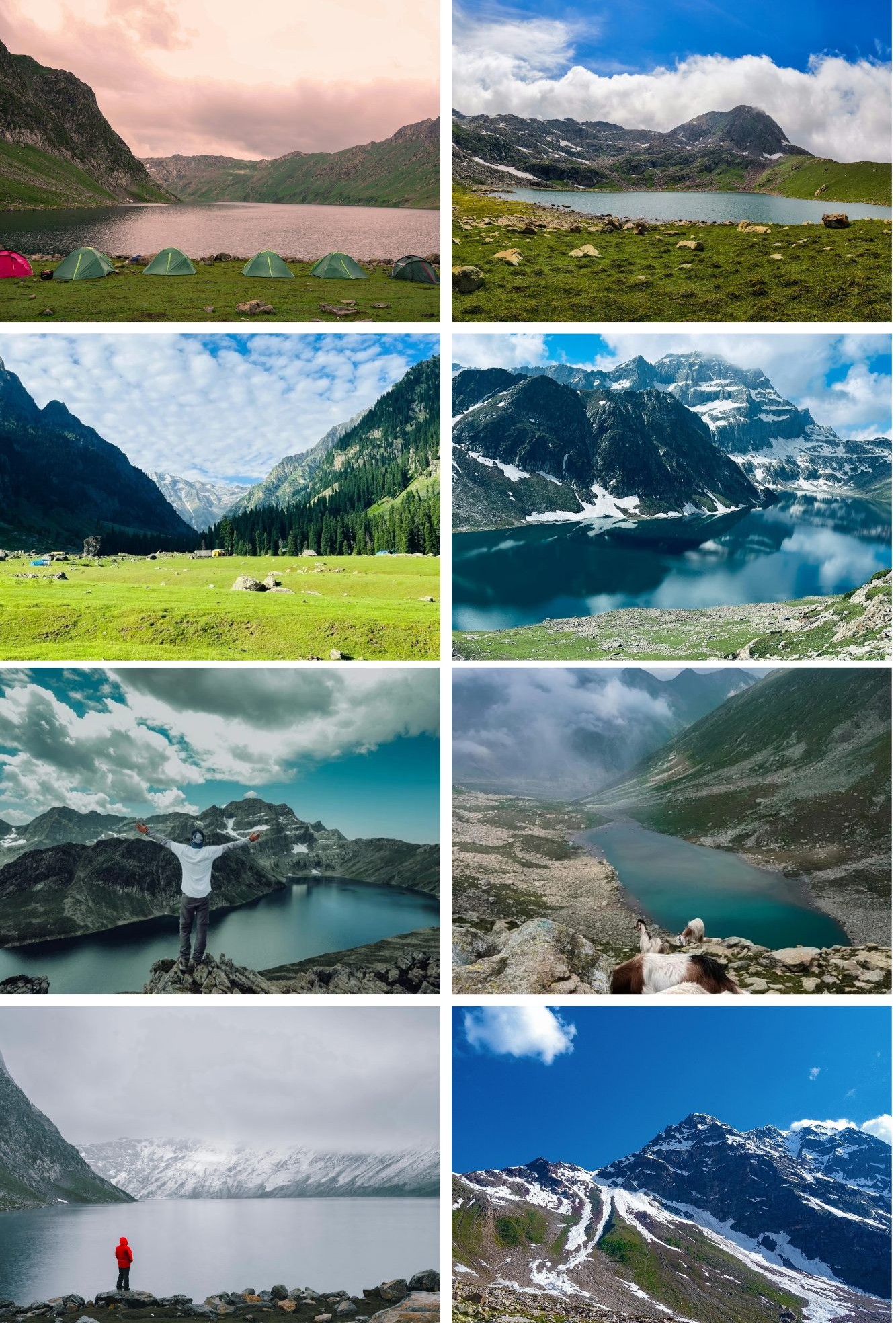
If you are looking for a trek that completely redefines how you view the Himalayas, the Kashmir Great Lakes Trek is the absolute pinnacle of alpine trekking in India. While iconic international routes like the Everest Base Camp Trek reward you with massive, jagged snow peaks towering over deep, dry valleys, Kashmir offers something entirely unique. Imagine vast, carpeted green meadows covered in wild alpine flowers, rugged mountain passes that push your physical limits, and not one, but over seven breathtaking, crystal-clear glacial lakes that change color from dawn to dusk.
Standing at the top of Gadsar Pass, completely out of breath, and looking down at the twin turquoise lakes nestled between colossal rock walls is often described as one of the most unforgettable, otherworldly moments of the trek. It is a visual payoff that no photo or video can ever fully capture. If you are planning to step foot on this legendary trail, this comprehensive, ground-truth Kashmir Great Lakes Trek Guide will give you everything you need to map out your journey safely, independently, or with an organizer. Let’s dive straight into the raw reality of trekking through paradise.
Kashmir Great Lakes trek – Quick Facts
| Trek Name | Kashmir Great Lakes Trek |
| Total Distance | Approximately 72 – 75 KM |
| Duration | 7 Nights / 8 Days (including buffer/acclimatization day) |
| Maximum Altitude | 13,750 ft (Gadsar Pass / ~4,190 meters) |
| Starting Point | Shitkadi Trailhead, near Sonamarg |
| Ending Point | Naranag Village, Ganderbal District |
| Difficulty Level | Moderate to Difficult |
| Best Time to Visit | July to September |
| Terrain Type | Alpine meadows, high mountain passes, glacier-fed lakes, rocky ascents |
| Major Highlights | Vishansar Lake, Krishansar Lake, Gadsar Lake, Satsar Lakes, Gangbal Lake |
| Permits Required |
|
| Mobile Network | Very limited / mostly no connectivity during trek |
| Accommodation | Tented camps (shared basis) or guided trekking camps |
| Fitness Requirement | Good cardio endurance required (5–7 km running or equivalent daily fitness recommended) |
| Risk Factors | Altitude sickness, sudden weather changes, steep ascents, cold nights |
Why the Kashmir Great Lakes Still Feels So Special
With the boom in Himalayan trekking over the last decade, finding a trail that still feels raw, isolated, and untamed is becoming incredibly rare. Unlike commercial tea-house trails such as the Langtang Valley Trek in Nepal, the Kashmir Great Lakes Trek manages to retain its wild soul primarily because of its geographical isolation and strict security protocols. Because you are trekking through sensitive border zones in Jammu & Kashmir, the trail is completely devoid of permanent concrete commercialization, meaning there are no tea houses, no wooden lodges, and no cellular networks once you leave the base camp.
Every single night is spent pitching tents on pristine green meadows right beside roaring streams or massive glacial lakes. You fall asleep to the sound of icy winds hitting the canvas and wake up to horses grazing peacefully in fields carpeted with buttercups and forget-me-nots. The sheer transition of landscapes keeps your brain constantly wide awake and mesmerized as you move from dense pine forests to barren, rocky moraines, followed immediately by endless neon-green meadows.
Why the Kashmir Great Lakes Trek is So Popular
The skyrocketing popularity of this trek isn’t just marketing hype; it is deeply rooted in the sheer volume of visual and emotional rewards the trail offers day after day. On most classic monsoon and summer crossovers, like the famous Hampta Pass Trek, you walk for a few days to experience a dramatic shift in landscape or see a single high-altitude lake. On this trail, the visual payoffs are continuous and massive, starting with the deep pine forests of Sonamarg, transitioning into the twin turquoise beauties of Vishansar and Kishansar, and peaking with the massive lakes resting under Mount Harmukh.
The trail also exposes you to the fascinating, timeless lifestyle of the local Bakarwals, who are nomadic shepherds navigating these treacherous passes with hundreds of sheep. Seeing them live in temporary stone mud-houses adds a rich cultural layer to the sheer physical challenge. It is the perfect marriage of raw wilderness, high-altitude endurance, and unmatched alpine aesthetics that keeps trekkers talking about it for years.
Kashmir Great Lakes Trek Difficulty
Let’s have a completely honest, no-nonsense conversation about the difficulty because a lot of online platforms tag this trek as a simple moderate walk, which often misleads beginners into showing up completely unprepared. The Kashmir Great Lakes Trek is physically demanding and leans heavily toward the difficult side of the spectrum for anyone who lacks proper training. You have to cross three grueling high-altitude passes, including Nichnai Pass at 13,100 feet, Gadsar Pass at 13,750 feet, and Zaj Pass at 13,000 feet, all of which involve steep, relentless zig-zag ascents over loose scree, boulders, and slippery snow patches.
The descents are equally brutal and act as absolute knee-breakers. You will drop thousands of feet over steep, rocky, and dusty terrain on the descent from Gadsar Pass and during the final day’s drop from Tronkhul to Naranag, putting immense pressure on your joints and toes. Even highly rated routes like the challenging Rupin Pass Trek don’t feature such sustained, back-to-back steep descents on consecutive days. Furthermore, you will be walking an average of 6 to 8 hours every single day for nearly a week while carrying a backpack, meaning your legs, lower back, and core will start pushing back by the third day if they are not well-conditioned.
“Trekkers who have previously completed the Annapurna Base Camp Trek may find Kashmir Great Lakes slightly more demanding due to its longer distances and multiple high-altitude crossings.”
Best Time for Kashmir Great Lakes Trek
The window to experience this trek is incredibly narrow because the heavy winter snowfall chokes the high passes, making the trail completely inaccessible for most of the year. The golden period runs from July to August when the snow on the passes finally melts, feeding the lakes and turning the brown valleys into vibrant, neon-green meadows. While this is peak monsoon season in the rest of India, the Kashmir valley receives significantly less rainfall due to the surrounding mountain barriers, giving you a mix of occasional afternoon showers, dramatic cloud formations, and meadows bursting with millions of alpine flowers.
If you prefer stable weather, clear blue skies, and near-zero rainfall, early to mid-September is a phenomenal alternative. During this autumn transition, the intense green of the meadows begins to turn into a beautiful golden-brown hue, the days stay pleasantly cool, and the nights become crisp and freezing. The water in the lakes is at its clearest during September, offering perfect mirror reflections of the surrounding peaks before early winter blizzards shut down the passes completely by October.
“Similar weather windows can also be found on the Everest Base Camp Trek, where spring and autumn are considered the best seasons for clear mountain views and stable trekking conditions.”
Altitude Sickness – The Most Important Thing to Understand
When you are spending six consecutive days walking and sleeping at altitudes well above 11,000 feet, Acute Mountain Sickness ceases to be a theoretical risk and becomes a very real safety factor. The air thins out significantly at these heights, and your body needs time to adapt to the lower oxygen levels. Early warning signs usually start with a throbbing headache, mild dizziness, and a loss of appetite, which can quickly progress to persistent nausea and mild breathlessness even while you are resting.
The absolute best preventative medicine on the trail is proper, systematic hydration by drinking four liters of water daily, mixed with electrolytes, while maintaining a slow, rhythmic pace rather than rushing up the slopes. Never ignore a headache or attempt to mask severe discomfort by quietly popping painkillers without informing your guiding team, as severe symptoms like confused thinking or losing your physical balance require immediate descent. Keep a strip of Diamox handy, but ensure you consult your physician regarding its usage before heading into the mountains.
Kashmir Great Lakes Trek Permits
Trekking in Kashmir requires a series of mandatory government, forestry, and military clearances due to the proximity of the trail to sensitive security zones. You cannot simply turn up with a backpack and start walking from the trailhead without proper documentation. You will need to provide your original government identification proof, multiple photocopies of your ID, several passport-sized photographs, a certified medical fitness certificate from a registered doctor, and a signed indemnity bond.
If you are booking through an established trekking organization, they will handle the bulk of the paperwork with the Jammu & Kashmir Tourism Department and local forest offices on your behalf. However, if you choose to trek independently with a local guide, you must personally visit the tourism office in Srinagar a couple of days in advance to secure the necessary movement passes. Be fully prepared for multiple Indian Army checkpoints along the route, such as near the Army camps at Nichnai and Gadsar, where soldiers will verify your original documents and note down your details with patience and respect.
Food and Accommodation During the Trek
Because there are absolutely zero permanent settlements or commercial shops along the entire trail, your lifestyle for these eight days will be entirely self-sustained and wilderness-based. You will be sleeping in high-quality, double-layered, three-season tents paired with sub-zero rated sleeping bags and thick foam mats to shield you from the frozen ground. All meals are served in a communal dining tent, creating a warm social hub where trekkers gather to share stories after a long day on the trail.
Your body will burn an enormous amount of calories due to the cold and physical exertion, so the kitchen team focuses on fresh, highly nutritious meals rich in carbohydrates. Breakfast typically includes hot porridge, eggs, toasted bread, or local flatbreads accompanied by tea and coffee, while lunches are packed with boiled eggs, sandwiches, and chocolates to keep your energy high mid-walk. Evenings conclude with freshly cooked, piping hot dal, rice, seasonal vegetables, and a warm dessert like halwa or gulab jamun to lift spirits before you retreat to your tent.
Cost Details
The overall cost of the Kashmir Great Lakes trek depends heavily on whether you choose a fixed-departure group tour, hire a fully customized private local team, or attempt to manage the logistics entirely on your own. A fixed departure group trek generally runs between $200 to $300 (approximately ₹17,000 to ₹25,500) per person, making it the most budget-friendly option as it includes entry-level tent accommodation, all meals on the trail, permits, guides, and centralized mule support while walking with a larger group.
If you value privacy, safety, and flexibility, hiring a customized private local guiding team will cost between $450 to $700 (approximately ₹38,000 to ₹60,000) per person. This premium option allows you to move at your own pace, choose your campsite locations, and enjoy customized meals. Beyond the base cost, you should budget an additional $40 to $60 (₹3,400 to ₹5,000) per vehicle for private cab transfers between Srinagar and the base camp, around $4 to $6 (₹350 to ₹500) per day if you choose to offload your personal rucksack to a mule, and roughly $15 to $25 (₹1,200 to ₹2,100) per trekker to tip the hardworking local cooks, guides, and horsemen at the end of the journey.
The Ultimate 8-Day Kashmir Great Lakes Trek Itinerary
Day 1: Drive from Srinagar to Shitkadi (Sonamarg)
Altitude: 7,800 feet
Drive Duration: 3 hours
Distance: 80 km
The journey kicks off with a scenic drive along the roaring Sindh River as you leave the bustling streets of Srinagar behind. The landscape shifts rapidly into steep mountains lined with iconic Chinar and pine trees until you reach Shitkadi, a beautiful green meadow field where you will set up your base camp for the night. Spending the afternoon walking around the local meadows is the best way to let your lungs adjust to the crisp mountain air, allowing for an early night’s sleep because your legs will face a real test starting tomorrow morning.
Day 2: Shitkadi to Nichnai via Shekdur
Altitude: 11,500 feet
Walking Hours: 6 to 7 hours
Distance: 11 km
The first day of actual trekking hits you with a steep, relentless ascent through dense forests of pine, fir, and silver birch trees. After a few hours of climbing, the tree line opens up into a gorgeous meadow called Shekdur, famed for its sweeping views of the Sonamarg valley. From Shekdur, the trail descends gently into a wide river valley, following a rocky path alongside the glittering Nichnai stream until you reach the wind-swept campsite of Nichnai where the rocky terrain begins.
Day 3: Nichnai to Vishansar Lake via Nichnai Pass
Altitude: 12,000 feet via Nichnai Pass at 13,100 feet
Walking Hours: 7 to 8 hours
Distance: 13 km
You will start climbing early to tackle the Nichnai Pass, which is a massive rocky saddle between two towering mountain massifs that requires a slow, steady effort over loose rocks and persistent snow patches. Once you reach the top of the pass, the rugged, dry valley gives way to an endless, wide-open green meadow that completely changes your surroundings. You will descend gently down into this grassy paradise, crossing a network of streams until you arrive at the banks of Vishansar Lake, the first of the great alpine lakes.
Day 4: Vishansar Lake to Gadsar Lake via Kishansar Lake and Gadsar Pass
Altitude: 10,800 feet via Gadsar Pass at 13,750 feet
Walking Hours: 8 to 9 hours
Distance: 15 km
This is the absolute crown jewel of the entire trek, but it is also the most exhausting day as you start by walking past the stunning Kishansar Lake before looking up at a near-vertical wall of rock and scree. Climbing Gadsar Pass will test every ounce of your stamina, but once you reach the crest at 13,750 feet, the panoramic view of both Vishansar and Kishansar lakes sitting side-by-side below is something you will never forget. You then descend down a steep, slippery trail into a pristine valley filled with bright red and yellow wildflowers, eventually camping near the hyper-isolated, brilliant blue Gadsar Lake.
Day 5: Gadsar to Satsar Lakes
Altitude: 12,000 feet
Walking Hours: 5 hours
Distance: 9 km
Compared to the previous day’s brutality, Day 5 is a welcome relief that allows your muscles to recover. You will cross a snow bridge and climb out of the Gadsar valley, walking along the side of a massive mountain ridge that opens up into a high, rolling plateau where the Satsar Lakes are located. Satsar is a collection of seven interconnected alpine lakes hidden among boulders and alpine meadows where the camp is incredibly peaceful, deep, and quiet.
Day 6: Satsar to Gangabal and Nandkol Lakes via Zaj Pass
Altitude: 11,500 feet via Zaj Pass at 13,000 feet
Walking Hours: 6 hours
Distance: 11 km
The day begins with a challenging scramble across a massive, chaotic boulder field where you have to balance carefully from rock to rock before facing a short but incredibly steep climb up to the top of Zaj Pass. The view from Zaj Pass is spectacular, greeting you with the menacing, sheer cliff walls of Mount Harmukh towering in the distance with two massive, dark blue sheets of water resting at its base. You will make a long, knee-jarring descent down the ridge to camp right on the shores of Nandkol Lake, with the mighty reflection of Harmukh directly in front of your tent.
Day 7: Buffer / Acclimatization Day at Gangabal Lakes
Altitude: 11,500 feet
Walking Hours: Flexible exploration
Distance: Variable
This day serves as a vital safety net in case bad weather traps you on the previous passes, but if everything goes smoothly, it becomes the most relaxing day of your trip. You can spend the morning exploring the vast perimeter of Gangabal Lake, which is significantly larger than the other lakes on the trail, or hike up the ridges toward the Harmukh Glacier feed streams. It’s the perfect day to rest your aching joints, wash your gear in running streams, and fully absorb the mountain stillness before returning to civilization.
Day 8: Gangabal to Naranag and Drive back to Srinagar
Altitude: Descent to 7,450 feet; drive back to 5,200 feet
Walking Hours: 6 hours of descent; 2 hours of driving
Distance: 11 km trek; 50 km drive
The final day is a pure test of your knees and quadriceps as the trail starts by gently rolling across the green meadows of Tronkhul before hitting a brutal, unrelenting drop through a dense pine forest down to Naranag village. The path is dusty, filled with loose stones, and incredibly steep, making the sight of the paved stone road of Naranag a welcome relief for your exhausted body. You can take a quick look around the ancient 8th-century Naranag temple ruins before hopping into your private cab for the smooth drive back to Srinagar.
Packing List for Kashmir Great Lakes Trek
When you are heading into an isolated wilderness with zero shops, your packing choices can make or break your entire trekking experience. For your clothing layers, you must stick to a strict three-layer system starting with three moisture-wicking synthetic t-shirts as a base layer, since cotton holds sweat and chills your core. Your insulation layer should consist of one high-quality fleece jacket and one lightweight down feather jacket capable of handling temperatures down to -5, while your outer layer must include a fully waterproof, windproof jacket and rain pant set to handle sudden storms on the passes.
For footwear and mobility, bring high-ankle trekking shoes with deep, reliable lug patterns, and make sure you break them in at least a month before the trek to avoid painful blisters. Pair them with three pairs of thick synthetic or merino wool trekking socks and one pair of warm woolen socks reserved strictly for sleeping. Sturdy, adjustable trekking poles are absolutely essential to save your knees from taking a beating during the massive descents, while a high-lumen headlamp with extra batteries, water purification tablets, and a personal medical kit containing blister tape and rehydration salts will keep you safe and self-reliant.
Important Trek Tips for Beginners
If this is your first time embarking on an extended, multi-day high-altitude expedition, dedicate yourself to intense cardiovascular training at least six weeks before the trek. Focus on running five kilometers in under thirty minutes, climbing stairs with a loaded backpack, or spending hours on a cycling trainer, because if your lungs and legs are weak, you will spend the entire trek staring at your boots instead of enjoying the scenery. You should also pack a high-capacity power bank and keep your electronics wrapped inside spare woolens inside your bag, as cold mountain weather drains smartphone and camera batteries at twice the normal speed.
Always show deep respect for the local customs and the Kashmiri horsemen and guides, who are some of the most hospitable, resilient, and warm people you will ever meet. Engage in conversations, listen to their folklore, and always ask for permission before filming them or their families. Finally, practice strict leave-no-trace principles by collecting all your plastic wrappers, wet wipes, and trash to pack back down to Srinagar, and never wash your plates using chemical soaps directly inside the fragile alpine lakes.
Frequently Asked Questions (FAQs)
Is there mobile network or internet connectivity on the KGL trek?
Once you leave the Shitkadi base camp on the second day, all mobile networks, including BSNL, Airtel, and Jio, will completely drop to zero. There is absolutely no internet or cellular connectivity until you reach Naranag village on the final day, so you must tell your family in advance that you will be completely offline for about a week.
Can a beginner do the Kashmir Great Lakes Trek?
A beginner can complete this trek successfully, but only if they are exceptionally fit and maintain an active lifestyle. If you work a sedentary desk job and have never hiked a steep hill before, this trek will feel incredibly punishing, which is why it is highly recommended to do at least one or two easier high-altitude treks before tackling this trail.
Is the Kashmir Great Lakes Trek safe for solo or female travelers?
The trail is highly monitored by the Indian Army, and the local Kashmiri guiding community is incredibly protective, professional, and respectful toward all trekkers. If you are a solo traveler or a female trekker, joining a reputable local trekking agency is an easy way to ensure top-tier safety, reliable logistical support, and great company.
What happens if there is a medical emergency on the trail?
Because there are no roads or helicopter landing pads nearby, evacuation must be handled manually by placing the trekker onto a horse and guiding them back down to the nearest army outpost or trailhead. This is why having a certified guide with a comprehensive wilderness first-aid kit and proper emergency protocols is absolutely non-negotiable.
Are there any specific fitness milestones I should hit before the trek?
To complete the trail comfortably, you should train until you can jog five kilometers in less than thirty minutes without stopping. Additionally, performing three sets of twenty lunges, squats, and step-ups daily will prepare your legs for the steep ascents and prevent deep exhaustion on consecutive walking days.
Can I use regular running shoes instead of specialized trekking shoes?
Using regular gym or running shoes is highly dangerous and discouraged because they lack the deep lug patterns and ankle support required for the slippery shale, scree, and boulders on the passes. Investing in high-ankle, waterproof trekking shoes prevents severe ankle twists and slips over wet rocky terrain.
Is a buffer day or acclimatization day absolutely mandatory?
Yes, skipping the acclimatization day is highly risky because your body needs consistent rest at 11,000 feet to produce enough red blood cells to handle the upcoming 13,750-foot pass crossings. It also provides a vital safety cushion if sudden, heavy mountain storms make passing through the narrow ridges temporary impossible.
Are there toilet tents available at the campsites?
Yes, professional trekking agencies set up separate, deep dry-pit toilet tents at each campsite filled with eco-friendly sawdust to absorb odors. Trekkers are required to drop their waste into these pits, and toilet paper must be placed inside garbage bags rather than buried directly into the natural topsoil.
Can I carry my own backpack or is it mandatory to hire a mule?
You are fully welcome to carry your own 50-to-60 liter backpack if you are confident in your physical stamina and core strength over seven-hour walks. However, if you feel carrying twelve to fifteen kilograms will hurt your knees, you can pay a daily fee to offload your primary sack to the local mule team.
Is the drinking water from the trail streams safe to consume directly?
While the natural stream water flowing directly down from the high glaciers looks perfectly clear, it can sometimes contain microscopic bacteria or animal droppings from grazing mountain horses. It is highly recommended to use chlorine chlorine-dioxide purification tablets or a high-quality squeeze filter before drinking.
What is the minimum age requirement allowed for this high-altitude trek?
Generally, most local guiding organizations and forest offices permit children from twelve years old up to healthy adults around sixty years old to join. Anyone participating outside this standard age bracket must submit an extra-rigorous medical clearances certificate proving pristine heart and lung conditions.
Final Thoughts
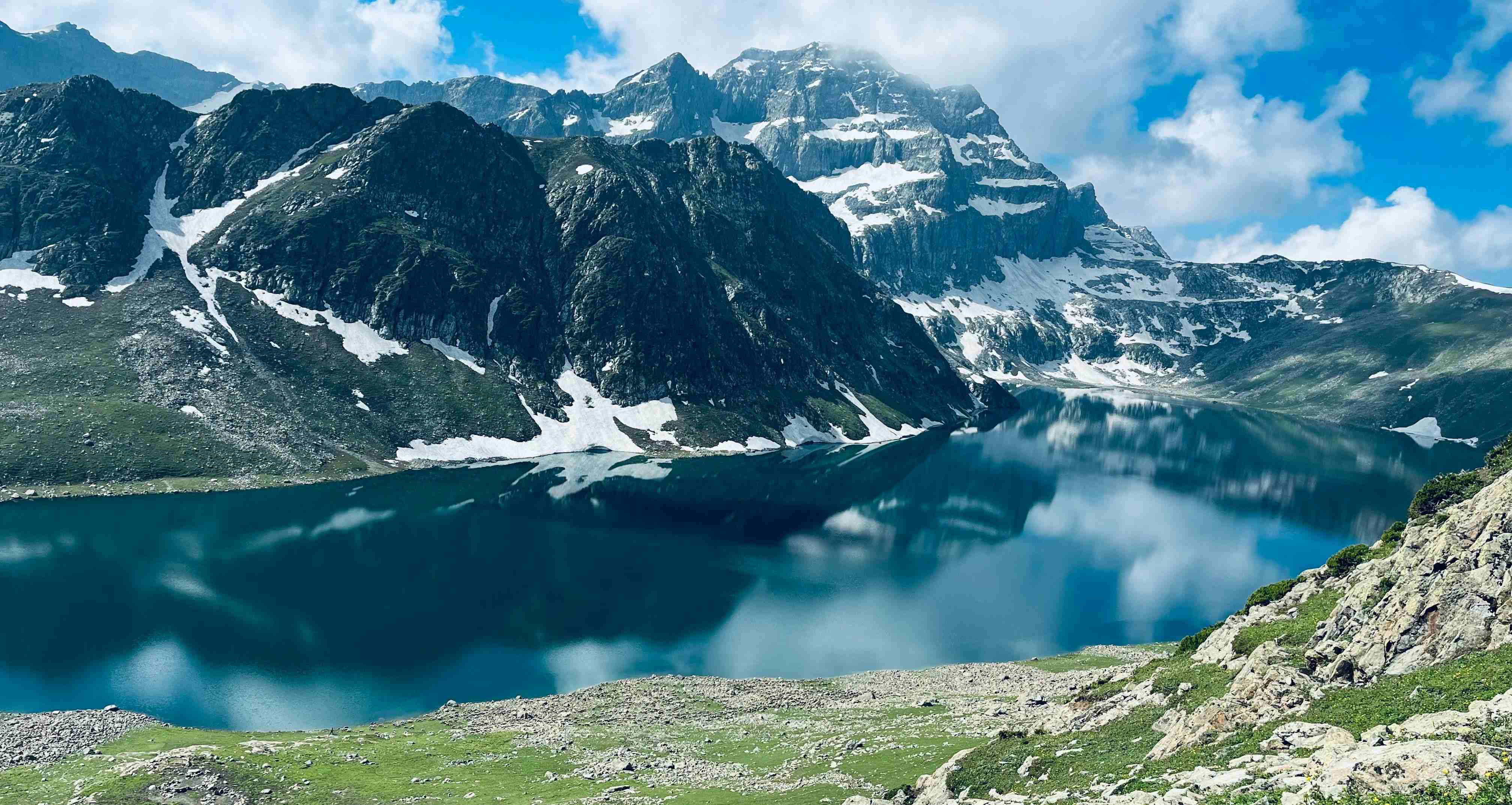
The Kashmir Great Lakes Trek is not merely a box to tick off your adventure bucket list; it is a profound journey that will change how you look at the mountains forever. It demands your sweat, your physical stamina, and a deep respect for the unpredictable forces of nature, but in return, it rewards you with a level of raw, untouched beauty that very few places on this planet can match.
When you find yourself standing on the shores of Gangabal at dusk, watching the last golden rays of the sun fade off the massive snow walls of Mount Harmukh, the exhaustion in your legs will vanish completely. You will be left with a deep, quiet sense of wonder that stays with you long after the mountain dust has been washed off your boots. Pack your bags, train your body, and step into paradise because the lakes are waiting.
For those planning their next Himalayan adventure, routes such as the Everest Base Camp Trek, Annapurna Base Camp Trek, Manaslu Circuit Trek and Kanchenjunga Circuit Trek are all worthy additions to any trekker’s bucket list.
ABOUT AUTHOR
Afjal Khan
Afjal Khan is the founder of Epic Himalayan Trails and a passionate Himalayan trekker. He shares trekking guides, route information, itineraries, and practical travel tips to help trekkers plan better journeys across Nepal and the Indian Himalayas. Through Epic Himalayan Trails, his goal is to make trekking information simple, reliable, and useful for both beginners and experienced trekkers.